Monday, November 09, 2009

authenticity


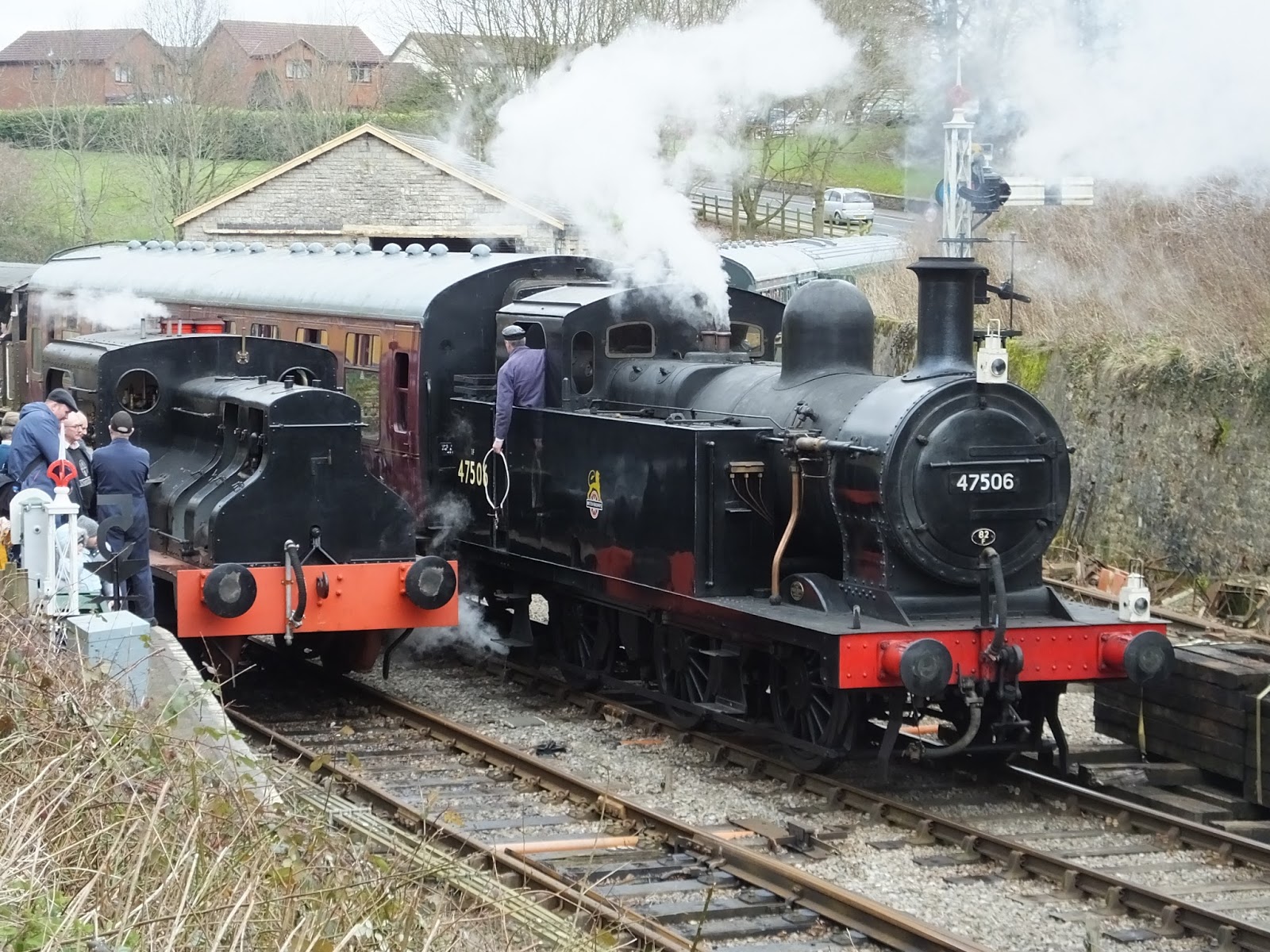
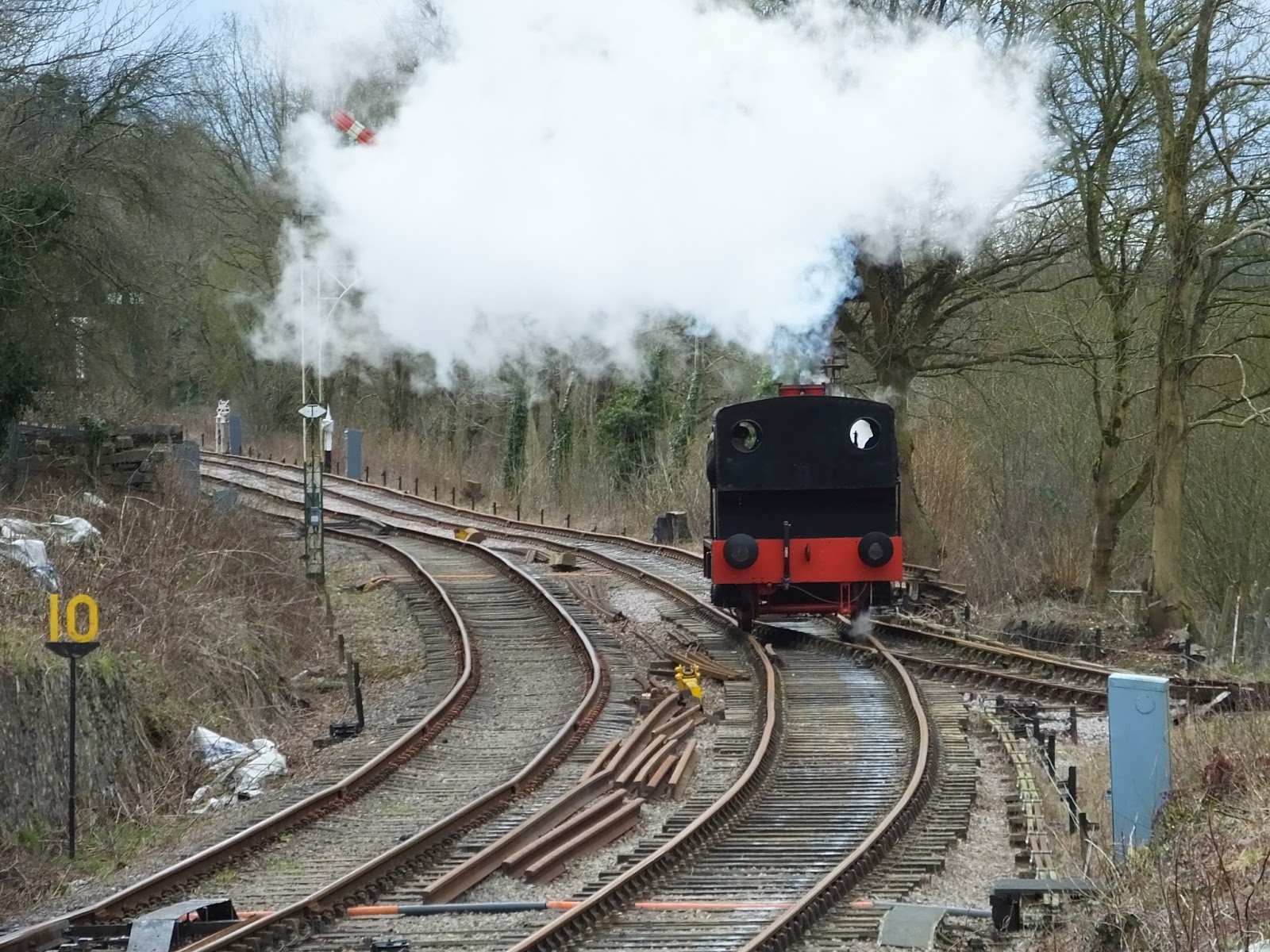
D1120 at Midsomer Norton 6.11.2009

This is a sight for sore eyes! This was the first time I'd seen the resident diesel at Midsomer norton in its new livery. What an incredible improvement on the odd Prussian blue livery it used to sport!

I never got the way certain rail enthusiasts spent years getting the infrastructure looking right only to have the whole illusion destroyed by inappropriate liveries. Midsomer Norton is supposed to represent the station as it was in 1955 or thereabouts. Yet up till last year this diesel appeared in what to all intents and purposes looked like an industrial locomotive livery.

Another feather in Midsomer Norton's cap. And a historic picture. How much longer before diesel locomotives vanish entirely as their fuel sources dry up?
Posted by Picasa

nothing's impossible


For those pessimists who are convinced that nothing good ever happens, remember that today we celebrate the twentieth anniversary of the fall of the Berlin Wall.

We can achieve anything if we have the will and the skills and the belief to make it happen.

I was laughed at in the mid 80s for predicting the fall of the Wall, but I never wavered in my belief it would happen. In fact things happened so quickly that I nearly missed it, eventually visiting Berlin in December 1989 where I took the pictures above. A few months later it was all gone ...
Posted by Picasa

hitting home


A gem from Mick Knox -

The picture of Midford is pure nostalgia. I even like the unclutted road, neat verges and the concrete & wire fencing. No pikey palisade fencing anywhere to be seen, unlike today’s Britain (Chilcompton Tunnel road access as an example). We have so much to admire in the transport infrastructure the Victorian’s bequeathed us, and yet we didn’t, and judging by Leicester City council demolition of the Braunstone Gate GC Bridge (ongoing), still don’t. I would love to see the S&D reborn, and deep down I know I will, because whatever happens with oil, you can’t just rely on one transport solution, i.e. roads. That was the mistake of the past, because somebody (like Mr Marples?) saw to it that everything had to go by road. And this is the view of a petrolhead, who still can enjoy driving, has motorcycles, has driven HGV’s, and started his working life as a vehicle mechanic in the army. The train is the superior form of transport and is once again on the rise in Europe and especially China. If the Beeching era had never happened here we would all have been better off, even those who never used a train, as the roads would have been less congested. So rail will once again rise here, especially when outside of the control of politicians, so let’s make the Somerset & Dorset the example and support the New S&D, and all groups aiming to preserve the route. United we triumph. Anyone noticed how oil is creeping up in price again? During a recession!

I'm planning a piece on oil very soon so Mick's comment is very timely. It also hits on something that's, to me at least, a little difficult to define. But do as Mick has and look at this site's header picture of Midford. Our built environment does not have to be forbidding and characterless. It can be modern but human scale. The S&D did this brilliantly, fitting in and enhancing the environment wherever it ran. The New S&D will do the same.
Posted by Picasa

Sunday, November 08, 2009

imminent launch


All New S&D members will soon be receiving their first ever newsletter/magazine. The first issue will be a computer generated mag, probably 4 to 6 pages, but we do have big plans for our magazine, inspired by the superb S&D Telegraph that is produced by Midsomer Norton.

I would LOVE to have correspondents from each of the active sections of the S&D - ie Midsomer Norton, Shillingstone, Sturminster Newton, Blandford and Gartell as well as from Washford. This will be a magazine for the WHOLE line. The New S&D exists in part to unify the disparate sections and groups currently operating along the route and at Washford. Almost all of our membership are members of these other groups and we get messages of support from individual members of these groups almost every day.

In addition to this we are developing our website as the primary historical resource for the S&D, searchable by everybody. This will be a particularly useful resource for writers and researchers, teachers and others along the route.

So what I'm asking for is correspondents who can send news and/or photos from Midsomer Norton, Gartell, Shillingstone, Washford, Blandford Arches and Sturminster Rail Group. Also photos of the line and stations from any point in its history including the temporary closure period, as well as stories from the line (again post closure is fine), oral histories, small artefacts etc etc.

This is all in addition to our primary role of purchasing sections of the route, lobbying government at all levels and supporting active groups along the route, financially and with manpower.

To get involved please email leysiner@aol.com or write to New S&D, 10 Bellamy Avenue, Hartcliffe, BRISTOL, BS13 0HW.
Posted by Picasa

greenhouse progress


It's great to see the Midsomer Norton greenhouse reappearing. I had once hoped to be overseeing this project myself, and even took a bricklaying course, but events overtook me!

It looks like all the brickwork is now in place, the rest of the greenhouse being wood and glass. Hopefully the greenhouse will soon be providing fresh vegetables and fruit for the catering coach.

This was such an iconic feature at Midsomer Norton and another reminder that that which was once destroyed can easily be replaced providing the willpower, manpower and cash are available. This should be an inspiration to us all.

It also says a great deal that in the past workers on the railway were given the time and freedom to pursue these activities. Far from being a drain on the company's resources it would have given workers at the station one more reason to be loyal to the railway and to be happy within their working lives. The New S&D will be pursuing this modern attitude to worker relations as we restore the whole route. The greenhouse is a symbol of this.
Posted by Picasa

Saturday, November 07, 2009

motorway madness


Austin at Cheddar!


Classic car style.


Midford.


Midsomer Norton yesterday.

It was quite sad watching the news this week as they attempted to celebrate the 50th anniversary of the opening of the M1. They failed miserably.

Driving is not fun. The average drive is ruined by poor drivers, lorries, buses, tractors, cyclists etc. You are stressed 90% of the time. there's no pleasure in it. It's not cool. It's just a chore.

If anything this event proves that we don't expect road travel to last much longer. They were trying to stir a mix of 'glamour' and nostalgia into something as vile as a motorway. Why apply nostalgia to something that we're supposed to believe will last forever?

I was once accused of being anti-car. Nothing could be further from the truth. I have travelled all over Europe by car and van. I was a professional driver for four years. I probably have almost as many photos of cars as I do of trains! I think the cars of the 50s and 60s had superb design and were great fun. But since then everything's gone downhill. Try as we might we'll never invest cars and roads with a thousandth of the romance of railways. Even the imminent death of cars and roads will not bring about any great regrets. Many of us, remembering hours stuck in jams, displays of amateur driving and having to fork out for repairs etc, will be glad to see the back of them.

Look at the shot of Midford above, then think about the average road. There's no comparison.

So what's my point?

We don't have to live in a world of squalor, poor design, vandalism, environmental damage. These are all choices, made through ignorance or a false sense of economy. If we want it we can live in a world where architecture and modern transport systems combine to give us a real sense of achievement and well-being, where we all work at jobs we enjoy and where we work with nature rather than against it. The New S&D is all about this. There'll be no nostalgia in what we do, no cutting corners and no working against nature. We'll create a sustainable transport infrastructure that people will enjoy using and which enhances the environment through which it runs, much as the old S&D did.
And it will make a profit!
Posted by Picasa

Friday, November 06, 2009

return to midsomer norton


I made a surprise trip to Midsomer Norton today (Pics above) and was very impressed. The above shots are tasters - will do more thorough posts over the next few days!

Apologies for no posts over the last few days but I've been extremely busy with (paying!) work!
Posted by Picasa

Tuesday, November 03, 2009

more midford


Thanks to Westfield Wanderers for pulling me up on this!

He asked -

No mention in your piece about the cycle route which can be seen passing through the site. What are your plans in the short to medium term with this? How is your relationship with Sustrans?

My reply -

Sorry I didn't cover this in the original post - Sustrans is of course the other presence at Midford we'll need to work closely with.

The cycle route won't be affected by our plans, at least in the short to medium term. It may be that at some stage, if we decide to lay track (for cosmetic reasons) that the cycleway will be diverted alongside and along the platform. Eventually of course we'll need to work closely with Sustrans to divert the cycle route slightly away from the railway, but this is enshrined in the terms of the lease that Sustrans currently holds, which require them to vacate the railway trackbed when a REAL railway (that is a line that is primarily a transport as opposed to heritage line) is reinstated. In other words until the line is restored as a fully working public railway the cycleway will stay in place.

We expect our relations with Sustrans to be superb as we are both sustainable transport organisations. We would love to see a cycle route running from Bath to Bournemouth, alongside the S&D wherever possible, with preferential fares for cyclists at all points.

I think it's very important to remember that the New S&D will be a major employer, the primary transport link and the only way to move large numbers of people and freight in the future along this important transport corridor, so nothing will deflect us from our very important task!

Posted by Picasa

midford today


We are likely to be taking over ownership of Midford early in 2010. With this in mind I paid a visit today.

The site as always is breathtaking, especially the approach from Hinton Charterhouse with the line hugging the hillside. The station site and the trackbed to the southern arch of the Long Arch Bridge (the section we will be buying) is very well kept, the platform at Midford is particularly well preserved.

One issue that will have to be addressed early on is our relationship with the Hope and Anchor. They own the station car park and, understandably, don't want visitors' cars filling up their car park at busy times. Workers at the site will no doubt be able to park vehicles either on the old trackbed or on the platform itself, but obviously we'll need to sort out visitor parking at an early date. This will probably involve some cost to us, either through buying permits or buying or renting part of the car park, or at the very least restricting parking at busy times for the pub. But obviously this new visitor attraction will bring MANY new customers to the pub, and the station will be even more important to the pub when the oil starts getting too expensive for people to drive.

This sort of situation will no doubt occur at every location we purchase, but it will always be our intention to work with local established businesses. That's really what we're about - keeping the local economy going through difficult times.

In the event of a visitor parking solution not being found then Midford will simply be preserved within our Land Bank until it is. Expect more news soon!
Posted by Picasa

Friday, October 30, 2009

majorca's future


I'm away for a couple of days from this evening to enjoy the Halloween delights of Pontins, Brean Sands.

Still on the holiday theme just a few reflections on our previous trip to Majorca.

Majorca is investing heavily in its transport future with a rebuilt railway network, new metro and planned tramways. Everything is switching from road to rail, as it should.

Majorca is, of course, primarily a tourist destination and much of its economy depends on visitors, an excellent reason for providing cheap, modern and efficient public transport. But it's also an island, and this may cause real problems in the future. Almost all visitors currently arrive by air, but air travel is doomed, no matter how much we don't want it to be.

Whilst resorts on the mainland will be served by high speed rail in the future there's no such future for Majorca - the island simply lies too far off shore to be connected by tunnel. So visitors in the future will need to arrive by boat. Will people bother? If anything Majorca will have to make itself even more attractive so investment in public transport is likely to increase.

We had a comment the other day from a group in Majorca that are opposed to the extension of the Manacor line to Arta. They are quite seriously suggesting buses can do the job! To be fair to them they are not anti public transport, and think the money that will be spent on the Arta line will be better spent elsewhere. But they obviously haven't had their Peak Oil Moment yet. How exactly will buses carry freight? How will buses tempt travellers from their cars? They haven't anywhere else in the world, so what will be different in Majorca? Trams tempt people from cars, as do trains. Trains and trams can carry freight. They are also not subject to congestion.

The line to Arta will be built, as will the proposed branch to Porto Christo. The anti rail group are 100% wrong.

But then there are still people who think the Earth is flat!
Posted by Picasa

Thursday, October 29, 2009

website developments


One of our big projects is to create a superb S&D website. Up to now it's mainly been about the future, but I believe there is a continuum right through from the original opening of the line in 1854 through the temporary closure period, to its current stirrings and through to its 21st century role as a vital sustainable transport link.

I feel that the website should also serve as an important resource for S&D fans, past, present and future. To this end we've already half completed the 'stations' section, and have just made the first steps towards building a 'locomotives that have worked on the S&D' section, which will be an enormous job!

The ideal is to have a site that first and foremost keeps our diaspora of fans and members in touch with what's happening on the ground, at Midford, Midsomer Norton, Shillingstone, Masbury, Gartell, Washford and Sturminster Newton but which also contains within its depths every single piece of information you will ever need to write books, articles, build models etc etc. I'd like eventually a huge photo resource of the line at all points in time, video library and even an oral history section (with transcripts).

To this end all photos, stories etc etc, as well as offers of help with content, from ANY angle (not just the historical!) are most welcome!
Posted by Picasa

Tuesday, October 27, 2009

final confirmation of peak oil ...


Peak Oilers generally are employed in the oil exploration or economics fields, but we're beginning to see Peak Oil break out of this rarified ghetto. Many investment advisers are now making the clear link between oil prices and the general economy and, surprisingly perhaps, the oil price is now being seen by some as the main determinant of an economy's performance.

This is a marker as to how things are developing, as are the huge price swings in oil since Hurricane Katrina. All of this was forecast by Peak Oil pioneers over a decade ago.

I know that Peak Oil is a far more technical subject than is (media-friendly) Climate Change. It doesn't have the same frisson or sense of excitement as does wild weather, we've not seen many films about it (the documentary Crude Impact is one, but no fiction as yet), no 'Day After Tomorrow' or the rubbish shown on Sci-Fi channel every week. There are only four novels using Peak Oil as a theme, though there are hundreds of factual works. But in many ways it is a far bigger threat to our way of life than is climate change, and certainly in the transport field it is of paramount importance. It still amazes me that most rail professionals and amateurs still don't allude to it. Whether that's through ignorance or fear is hard to say!

This is really an introduction to yet another pilfered article that these days arrive almost daily in my in box, coming almost exclusively from investment professionals. I know some of you don't like the Peak Oil stuff, others don't like my trips away from the S&D, but it is all grist to the mill. You can always skip these bits, but remember, this will affect you in the future and there are things you can do today to ease the transition for you and your family to a post peak oil world. I don't go for the apocalyptic approach, the situation is not only survivable but we should come out the other end living in a far better world, with different priorities and a different pace of life.


The biggest threat to the recovery – the soaring oil price

Oil cartel Opec is starting to get a bit twitchy about the soaring oil price.

The Angolan oil minister, Jose Botelho de Vasconcelos, reckons that $75-$80 a barrel is the optimum level for both consumers and producers. We’ll come back to that view in a moment. But he’s also worried. If the price keeps rising towards $100 a barrel, Opec members might be open to pumping a bit "more oil into the market," he says.

But why should Opec be worried by rising prices? And can they do anything about them?

Oil's threatening to escape its 'optimal' price

The world is gradually succumbing to the notion that we’re back in Goldilocks territory. Economic policy is "not too hot and not too cold" – it’s "just right". The one big blot on the horizon is the rocketing oil price.

Although it slipped back yesterday, oil has recently clawed its way above the $80 a barrel mark. That’s threatening to escape from its ‘optimum’ range of $75 to $80 a barrel, says Opec president, Jose Botelho de Vasconcelos. "I think a balanced price is always better."

Now I can’t claim to have any idea where Opec gets this optimal ‘balanced price’ of $75-$80 a barrel from. I suspect that it simply comes down to what they think they can get away with. Bear in mind that at any point in history other than the past two years, an oil price at that sort of level would have been deemed an utter catastrophe for the global economy. After Hurricane Katrina, for example, the highest the oil price rose was to just over $70 a barrel.

So it’s quite impressive that oil producers have managed to ‘sell’ the idea of $70 plus for a barrel of oil as an aspirational target price, rather than a horrendously expensive level for the world’s key raw material.

Why Opec is concerned about the soaring oil price

But now even Opec is concerned. For one thing, once you get to this price, countries and independent producers have much greater incentive to seek both alternative energy sources, and alternative oil sources. Investment in these areas has been hit by the recession, but it’ll soon pick up again if it looks like $80 oil is here to stay. So by a ‘balanced’ oil price, Opec means one which generates lots of profit for them, but is still not sufficiently attractive to encourage serious investment in alternatives.

And of course, there’s the little matter of the global economy. One of my key personal economic barometers is the price at the petrol pump. When the price per litre dipped briefly below 90p earlier this year, I felt that little bit richer. Now that it’s pushing £1.10 again, I’m wondering where to cut back.

As Neil Atkinson at KBC Services tells The Times, "if the oil price continues to rise in the next week or two, there is a danger that the economic recovery will be strangled at birth." A fresh collapse in the global economy would of course hammer the oil price again.

So Opec wants to avoid killing the golden goose. High oil prices sow the seeds of their own destruction, and the oil cartel would ideally like to find the ‘Goldilocks’ level at which they can make handsome profits while allowing the global economy to stay afloat.

But can Opec increase production faster than the world’s central banks can increase the money supply? If oil prices are being driven higher by the same thing pushing up every other asset class – cheap and free-flowing money – then Opec’s efforts to fiddle with supply and demand will have little impact on the price.

This is a serious threat to the current ‘recovery’. Andy Xie argues in the South China Morning Post that high oil prices in 2006 were the "final straw that tipped the US property market" – US consumers squeezed by rising petrol (gas) prices finally succumbed to the weight of their unaffordable debts. He also argues that the resurgence of oil in 2008 "pulled the rug out from under the derivatives bubble."

An oil bubble, he says, is different from others. It hurts consumption, and it also drives inflation higher, which eventually results in tighter monetary conditions. "Oil speculation is the party crasher, even though it destroys itself by destroying others."

How to protect your portfolio from the oil price rise

He reckons that there’s a good chance that we’ll see $100 oil again sooner rather than later. But that will almost certainly mean a "double-dip" recession in 2010, as once fiscal stimulus is pulled out of the economy, consumers are unlikely to pick up the slack, due to high levels of unemployment. John Mauldin of Investors Insight agrees – he also "firmly believes" that we’re heading for a double-dip recession in the next 18 months. And during a recession, he points out, share prices fall by an average of 40% – so "adjust your portfolios accordingly," he advises.

Source http://www.moneyweek.com/
Posted by Picasa

Monday, October 26, 2009

quick return to palma


Traffic filled streets - this one seen from a passing train!


Typical off peak loading on Palma buses.


Electric traction is already in Palma - this is the very recently opened metro railway in the Placa D'Espanya.


Yet another packed bus!

Apologies for returning to Majorca whilst in the midst of a New S&D roll, but if I don't do it now I never will!

The buzz in Palma is that tram construction will start soon. Spain has been opening new tramways at a quickening pace so Majorca's missing out a bit. The Government of the Islas Balaeres decided years ago that they were going to switch from a road-based to a rail-based economy, solid evidence of this shift are the reopened railways to Manacor and Sa Pobla (see earlier post) and the brand new Metro to the University, as well as the amazing rail/Metro/bus/future tram station underneath the Placa D'España.

The first tramways will be from Palma to the airport and to Arenal. We stay in Arenal - probably the only Brits to do so as it is otherwise 95% German and 5% Dutch - so this line will be very useful to us. There are regular buses to Palma, via the backstreets(15) and motorway (25), running every ten minutes or so, but they are hopelessly crowded. As most of the users are holidaymakers they don't have access to cars so the bus is essential (and very cheap). And the Dutch and Germans love their trams!

Once buses reach this level of capacity - that's full to standing every five minutes (taking into account both routes) - then trams become the obvious solution. Of course they are also more 'environmentally friendly' as there's no pollution from the vehicles themselves, giving a cleaner atmosphere. They are also seen as modern and classy as opposed to the old, smelly and 'common' buses. Majorca should have little difficulty generating most of its energy needs from solar power as otherwise it's quite vulnerable to energy problems as a small island. This was probably also behind the government's transport strategy, even if not overtly stated!

Majorca does of course already have a tramway, at Soller, so it's hardly an alien concept. Palma itself had a decent tramway network until 1959 when it was abandoned in the rather strange atmosphere of the times.

I suspect that when the tramway is built, and construction is due to start very soon, other areas around Palma, and I'm thinking particularly of Magaluf, will clamour for theirs. I've already decided not to return to Majorca until there are new railways and tramways in place to tempt me back!

One last post on Majorca to follow very soon, then I promise S&D stuff - at least until I go away to Barcelona in February where, surprise surprise, there are new tramways ...
Posted by Picasa

reorientation


We are all in for a big reorientation over the next 20 to 30 years.

With respect to the rebuilt S&D we are not only looking at restoring the 'classic' routes, Bournemouth to Bath and Evercreech to Burnham, but adding extra capacity and flexibility by including new links to Brockenhurst via Wimborne and Ringwood and to Bristol via Pensford, and also looking at the whole provision of rail to Glastonbury and Wells by not dismissing the possibility of building a wholly new route from these two important tourist towns over the Mendips to a junction near Masbury rather than simply restoring the original route from Evercreech Junction. We also expect that the entire main line will need to be double tracked including the long Blandford to Templecombe section, though with the obvious proviso of physical limitations north of Midford into Bath!

In the wider transport field all communities will need to look at how they are actually arranged. Suburbs, where they are still viable, will need trams or ULR to continue to allow them to thrive. Businesses needing incoming and outgoing transport will need to be located next to a rail or tram route with larger concerns having private sidings. Many industries will need to reconnect using their own private industrial lines. Whole swathes of manufacturing and service industries will vanish with the withering of pure consumerism. Seaside resorts benefitting from an improving (warming) climate and the end of cheap air travel will need to ensure they are connected to the network and outlying parts of their resort connected to the nearest network station by tram. Everything will need to be sustainable both in embedded energy and energy used to operate. Farms will need to be connected to the network by light rail to allow produce to reach markets which will also, of course, need to be rail served.

And individually, and as families, we will all need to reorientate the way we live. Within 20 to 30 years the idea that we once all - or nearly all - had access to private motorised transport will seem incredible. The electric car, now the only serious option in a post-oil society, will wither on the vine as the roads themselves fail without affordable materials for repair and under the new political regimes that will do everything they can to reduce private transport, using the oil price first, then rationing then actually outlawing private vehicles. This will not of course be a concatenation of political decisions but economic imperatives, so will be applicable to anyone who is voted in. None of this is rocket science.

We'll need to change the way we work, many of us will have to relocate, as close as we can to rail transport, grow our own food and live more locally-based lives. Personally I hope we retain our love of travel even if many are counting on us giving it all up. I don't think this will be the end of history or of, indeed, progress. But I do think we are all going to have to sit back and relax for a few generations until everything is totally reorientated towards a truly sustainable society. Once that's in place technology can start to develop again. I'm sorry if I'm an incurable optimist, but it's a position I've arrived at after many decades of pushing the boundaries!

(Apologies for using continental European images for this article - but they are so far ahead of us!!)
Posted by Picasa

Sunday, October 25, 2009

return to Evercreech Junction


My last trip to Evercreech Junction was in 1980.

It was good to see that the main station building is still standing, ready for purchase by the New S&D in the future.

This iconic location - and not just from an S&D perspective - is a sad sight today. It should be bustling with life with trains coming every half hour or so. There should be shops and restaurants serving the thousands of visitors coming by train. There should be trains running 24 hours a day, 365 days a year. It underlines the utter desolation of certain places when they lose their trains and how desperately they need them back.

In fact the whole journey today from Bristol to the Gartell Railway underlined this economic apartheid. Binegar, Shepton Mallet, Evercreech Junction - all seemed dull and lifeless with few if any amenities. Conversely the two places we did pass through that are still served by trains - Castle Cary and Templecombe - seemed lively and alive. The car park at Castle Cary was packed on a Sunday.

This contrast will become sharper and sharper as the Energy Crunch bites harder. Those people clever (or lucky) enough to live on a railway will be able to continue to go about their daily lives. Their property prices will rise (or fall less) than those who suddenly find themselves out in the sticks, with just crumbling roads and hideously expensive cars and buses to rely on. There will be a shift away from these blighted areas to those that will have a bright future. Even today properties close to railways (or more precisely stations) are worth a good deal more than those that are bereft of modern transport.

This perception will ensure that as time goes by more and more people in these areas (which, currently, sadly includes most of the S&D route) will absolutely insist that their railways are returned. But they can't all be returned at once, there will be a distinct pecking order. We have every intention that the S&D will be up there with the usual suspects - Exeter-Okehampton-Plymouth, Oxford-Cambridge, Waverley route, Great Central, Skipton-Colne, Lewes-Uckfield etc etc.
Posted by Picasa

gartell extension


Two above - track already laid on the gartell extension towards Templecombe. The existing route joins this line in the far distance.


Looking northwards on what will become the Templecombe extension. Judging by the inscription on the crane this land is already owned by the Gartell engineering business!


The sign that greets passengers who alight at Park Lane. It would be nice if, as a holding operation, the line WAS walkable all the way to Bournemouth West! Eventually of course this section will be relaid as a standard gauge main line. The New S&D will hopefully work with the Gartell to develop this unique narrow gauge (and eventually dual gauge) section of the S&D, the Gartell Railway becoming a valuable extra attraction on the route.

I do feel that narrow gauge railways will become very commonplace throughout the UK, for both industrial and passenger use, filling a vital gap in connecting industry and people to the main standard gauge network as the road network vanishes.
Posted by Picasa

gartell delight


We had a really nice trip to the Gartell Railway this afternoon, the last open day of the season. There were two trains running, both behind steam. I was last there around five years ago and there have been a few changes including the construction of a superb cafe/function room.

We also got to go up in the signalbox where I finally met John Penny who has been a great source of info on the Gartell over the last year or so.

All in all the Gartell is an excellent pointer to how the New S&D could develop, with a really friendly feel and excellent facilities. It does the S&D proud.
Posted by Picasa

Saturday, October 24, 2009


The following extract is from an investment newsletter, and shows how Peak Oil concerns have now very much entered the mainstream. Investment advisers, like New S&D promoters, are not affected by sentiment, nostalgia, wishful thinking or their own agenda, but by simple cold hard facts!

There are a lot of possible outcomes from the end of cheap oil. For our anomynous nostalgic chum (see yesterday's post) I've included some pretty pictures of diesel trains, which will of course be one early casualty, along with cheap air travel and road transport of freight, of this quantum shift in transport patterns and infrastructure. The rail future is clearly electric and sustainable (wood burning/wood waste burning) steam. You will only see diesels in a museum.

The Energy Crisis Just a Bit Delayed

Eighty-five million barrels a day.

That’s the most that can be produced. So when recession causes a temporary decrease in world consumption, it can seem like those 85 million barrels are enough. But consumption is bound to resume its upward climb, while those 85 million barrels a day are all we get. The day of reckoning has just been delayed for a little bit. “Can’t we get more than 85 million barrels?” some folks are bound to wonder. Let’s look into that.

Those Stubborn “Peak” Curves

This week I was in Denver, attending the 2009 conference of the Association for the Study of Peak Oil & Gas (ASPO). Despite all the happy talk in the Big Media about how the oil situation is under control, I assure you that the oil situation is NOT under control.The market meltdown and world recession of the past year has bought some time, or stolen some time may be a better way of saying it. All the “peak” curves are still out there, but are merely adjusted a bit to the right on the timelines.

As Marine Corps Gunnery Sergeant R. Lee Ermey likes to say on the television show Mail Call, “Wipe that smile off your face.” We’re staring at an energy problem that’s coming down the tracks like a runaway freight train. It’s just astonishing that more people don’t appreciate the looming impact of Peak Oil.

Meanwhile, the politicians are fooling around with the health care issue. Hmmm... I have some news for them. If you screw up energy, health care isn’t going to matter very much.

Oil Output Not Increasing

It might be a comforting thought to believe that world oil output can increase. Indeed, many policymakers in the U.S. and Europe apparently dream themselves to sleep at night pondering how the current oil volume of about 85 million barrels per day could move upward to, say, 95 million barrels per day — “if only the world oil industry were more efficient.”Yeah, right. Except the global oil industry is not that model of dreamland efficiency. Sure, there are some bright spots. The big internationals like Exxon Mobil, Chevron, BP, Shell, etc. are good. There are some really good state oil firms like Brazil’s Petrobras and Norway’s StatoilHydro. Saudi Aramco is outstanding. These guys are all doing great work to keep the world’s pipelines and tankers filled.

But much of the rest of the world’s oil industry lacks the knack for capital discipline and crisp project execution. Venezuela’s oil industry is a basket case, what with the Chavez-led nationalizations and mass firings of recent years. Output is falling in Venezuela, and this from a nation with among the largest hydrocarbon reserves anywhere in the world.

Mexico’s national firm, Pemex, is nothing but a piggy bank for the politicians, who suck most of the investment capital away from the oil patch and into their own boondoggles. Thus is Pemex walking off a cliff of underinvestment, depletion and decline. According to Matt Simmons, Pemex may not be exporting any oil at all to the U.S. within 18-24 months.

Iran’s oil industry is in a slow death spiral, despite the occasional report of Chinese assistance with field development. Apparently, there’s a “Twitter Revolution” going on in Iran that includes people at the grass roots impeding the oil industry. Well, it worked to depose the Shah back in 1979. Perhaps the Iranians can rid themselves of their mullahs in a similar way.

Next door in Iraq, chaos reigns. According to Matt Simmons, the Iraqis “are in the dark about how to run their oil industry.” The Iraqi oil legislation is so burdensome that almost all players within the international energy industry are spurning Iraq, including the Chinese. Wow. When the Chinese won’t invest in your oil fields, there MUST be something wrong.

And so it goes. The bottom line is that we should expect a global oil shock by 2012, or earlier if global economic activity kicks into high gear. It should go without saying that despite any calamities that may come from such a thing, you would be very happy if you’d taken advantage of lower oil prices to stock up.

(Written by Byron King)
Posted by Picasa

Friday, October 23, 2009

the new elite ...


I got one of those absolute gifts in the comments box today which I just felt I had to share!

[T]here are powerful anti rail figures in this country with money finding loop holes to continually build on trackbed and encourage network rail to sell off everything and contine to beat the modern railway back to the core. [T]he relentless lifting of sidings and rationalisation will continue. The goverment wants the 20 billion subsidy reduced, and therefore network rail do not have money to do anything except essential renewals and capacity enhancements on the very core uk routes. overcrowding and fares will continue to rise and freight and sidings will be a distant memory in 15 years time. the railways are screwed and we all know it, thats why we live in our little nostalgic bubbles trying to enjoy the past we miss, during our lives.

I absolutely LOVE the way he or she is trying to tar us - of all people - with a big nostalgia brush! D'you suppose they even read this site? I suspect the character is speaking solely for themselves, and considering the post to which the comment was added has yet to experience their 'peak oil moment'. I love the little paranoid hint of conspiracy theory too!

To recap - this rubbish is pure 1970s left wing defeatism. It says nothing of today, let alone the future, or even of the recent past.

The owners and operators of railways into the 21st century will be the most important people in the economic firmament. They will be part of a new business elite that will help the world pass through the end of oil into a sustainable future. The nostalgists dread the fact this is happening, whether from a political, personal or business angle. They are swimming against the rip tide of history and, sadly, I think they know it. They are attempting to set an agenda that is shattering into a million discrete pieces.

We've done all this. We've gone through the 'no hope' stage, almost willed the end of rail, just to taste the bitter sweet honey of decay. There was a beautiful grandeur in the empty stations and trackbeds of the 60s and 70s. But things have changed faster than any of us dared hope. Roadbuilding has ground to a stop, air travel is in decline, the price of oil is starting to rocket again and nothing really is being done to address this apart from the building of thousands of miles of high speed railways and the reopening of lines and stations at a stately pace. This is our clue. Look around you. Look at where every supermarket is being built or has been built in the last twenty years - next to open or disused railways. Look at the Channel Tunnel - built as a RAIL tunnel. This hardly suggests the supremacy or even equality of roads, and these were decisions made years ago. Look at the lack of any replacement for Concorde - hardly a ringing endorsement of air travel.

Perhaps, to be generous, our troll poster mistook our reporting of events on the heritage sections of the S&D as some sort of nostalgic diversion. They are nothing of the sort. But having to post every day on here I feel that reports on events up and down the route - even if of a 'heritage' nature - will be of interest to most of our readers, even those of you whose prime interest is in modern and future transport systems.

And does he or she think we are stupid nostalgists for wishing to maximise the revenue and appeal of the New S&D? Of course we want to encourage steam visitors to the route - they will increase income and interest in our revived line. And steam itself - albeit in a modern and sustainable form - has an incredibly bright future. Nothing nostalgic in that, any more than there is nostalgia in a nuclear power station when uranium heats the water that creates the steam that drives the turbines that generate the power.

Nostalgia - the very word makes me reach for my revolver!
Posted by Picasa

last chance to ...


... visit the Gartell Light Railway for this season, comes this Sunday (25/10/09). They're open from 10.00 and first train is at 10.30. Clocks go back the night before so use the extra hour in bed to be refreshed and ready to go and see them! Signed from Templecombe in the North and Henstridge lights in the South, you can't miss it. Take a leisurely trip down the Blackmore Vale behind a steam engine - they have two, remember! Food and drink are available on site, and the GLR is an ideal family destination.

(There are Santa trains in December for which booking is essential).

I am going to try to get down on Sunday so hope to see you there.

(All photos courtesy John Penny).
Posted by Picasa

Wednesday, October 21, 2009

remember peak oil


The following extract is offered to give you a flavour of the complexity of the peak oil argument with plusses and minuses on both 'sides'.

Bear in mind that a billion barrels of oil is currently about 12 days' worldwide demand.

However you read this the one thing all are agreed on is that future oil supplies will be far more expensive to obtain, implying huge increases in the price of petrol and diesel at the pump. This can only be good for (non-oil operated!) rail.

An Update on Peak Oil (Yes, It’s Still a Problem)

Marcio Mello, the former explorationist from Petrobras and now independent petroleum consultant, electrified the Denver meeting of the Association for the Study of Peak Oil & Gas (ASPO).

In a riveting talk that lasted well over an hour, Marcio detailed the immense petroleum potential of offshore Brazil, as well as the Amazon Basin. If Marcio’s estimates are correct, Brazil may be the location of near 200 billion barrels of additional petroleum resources. That’s well within the range of current resource estimates for Saudi Arabia.

For good measure, Marcio described the petroleum potential of offshore West Africa — another 130 billion barrels — as well as the Congo region, with 50 billion barrels or more. Finally, Marcio described the “unknown potential of the US back yard, the Gulf of Mexico (GOM).” Marcio offered remarkable insight into the deep regions of the GOM, 100 miles and more offshore Texas and Louisiana. He showed early work he performed on a number of GOM areas, including the site of BP’s (BP: NYSE) recent billion-plus barrel find at the Tiber site. It was clear from the reaction of many in the ASPO audience that Marcio hit nerves. If his analyses of the South American, African and GOM petroleum systems are right, then in the future the world has access to much more conventional oil than people previously believed. But it’s not the same as saying the nothing has to change in modern habits of energy use. Getting this oil will require a trillion-dollar level of offshore, deepwater investment. It’s a 50 to 100 year project. The new thinking about deep petroleum systems may allow the world’s energy thinkers to back off from raw geologic concerns about the wheres and how-muches of resources. But like a game of “whack-a-mole,” the reduced worry about geology now translates into a new emphasis on exploration and development technology, as well as capital, skilled personnel, political issues, environmental safety and climate alteration. In the past 20 years, Marcio has pioneered the idea of detailed geochemical analysis of “petroleum systems” in the Southern Hemisphere. The goal of the work is to identify and locate deply buried oil-bearing zones. Marcio’s work led directly to dozens of oil finds by Petrobras, both onshore and offshore. His work has also led to significant oil finds in the Caribbean region, Colombia and Peru.

Some Bad News

After Marcio Mello offered his ebullient view of future oil supplies in the world’s deep waters, the next day was a return to earth for the assembled throng at the Denver meeting of the Association for the Study of Peak Oil & Gas. The day was filled with well-informed viewpoints on the looming issues of energy scarcity in a capital-constrained world. Among other things...Geologist Art Berman offered a decidedly negative view of the latest “big thing,” which is obtaining large volumes of natural gas from tight shales. In a comprehensive review of production and flow rates from several thousand wells drilled in the past decade in the Barnett Shale of Texas, Mr. Berman has a gloomy forecast. Looking at a large sampling of Barnett wells, the overall data reveal that initial gas flows decline rapidly. With some wells, the drop-off is as much as 70% in the first year, with further declines of 20% in the second year. This hardly dovetails with the happy talk about how “shale gas” will supply U.S. energy requirements for the next several decades, if not a couple of centuries. It appears that most Barnett wells are short-term money losers, with a few prolific wells carrying the bulk of capital expenditure. Across the industry, according to Mr. Berman, the whole process stays afloat due to liberal application of borrowed money, as well as dilution of existing shareholders by production companies issuing new stock. According to Mr. Berman, the picture is not much better in other shale plays, such as the Fayetteville and Haynesville shales. And similar gloomy data are just now starting to come in on the embryonic gas play in the giant Marcellus formation of Pennsylvania

And Peak Oil Still Looming

Matt Simmons gave another of his famous talks about the specter of Peak Oil. The only things that are changing, according to Mr. Simmons, are that things are getting worse for future energy supplies. It’s difficult to say with specificity how bad things are, because the data are so poor on a worldwide basis. “Look at what happened with the bad information we had, or didn’t have, with the financial institutions over the past couple of years,” said Mr. Simmons. “With our energy data, it’s worse. We’re in for some shocks that will change our lives in ways that’ll rival Pearl Harbor.” Expect to see oil at $200 per barrel by the end of 2010, according to Mr. Simmons. Also expect to see net oil exports from Mexico simply vanish within 24 months or less. This will play havoc with U.S. refiners on the Gulf Coast. Mexico has simply delayed for too long its effort to explore, drill and rebuild its fast-depleting oil resources. Mexico is going to have to scramble to salvage something from its looming energy disaster. These die are cast. Things could go wrong with energy supplies in any of a dozen places, according to Mr. Simmons. For example, there’s a stealth “Twitter revolution” in Iran that’s slowly shutting down that country’s oil production. Shutting down the oil industry was the straw that broke the camel’s back and brought down the Shah in 1979. There’s some thinking that it may work to rid Iran of its mullahs. In Venezuela, the output of the state oil company PdVSA is declining at alarming rates due to political interference and underinvestment. In Nigeria, the low-grade civil war could quickly morph into a large-scale civil war. In Iraq, according to Mr. Simmons, “They’re in the dark about how to rebuild their oil industry.” And of course, a lucky terrorist shot could take down any of hundreds of major oil installations worldwide, wreaking havoc through the following ripple effect. Mr. Simmons admires Brazil’s Petrobras, calling it “the finest large oil company in the world today.” But the offshore success of Petrobras will simply not be able to make up for the multitude of other problems with the global energy industry. There won’t be enough oil, and it won’t arrive in time. Longer term, Mr. Simmons expects to see oil at $500-700 per barrel. “People need to understand how expensive it is to obtain oil,” said Mr. Simmons.

Much of the world’s energy infrastructure is old and rusting and will require several trillions of dollars to replace — if it can be replaced. (Is there enough steel, for example? Where will the money come from?) Add the aging work force, within which many new hires were laid off in the past year. There’s a serious lack of skilled talent across the board, and no amount of clever management and automated “expert systems” will make up the difference. Finally, new technology is coming on line slower than most people anticipated. The deeper, more challenging environments are sucking down technology and money, and yielding less than expected in many cases. According to one study, only eight out of 100 major energy projects came in on time, were within budget and yielded the expected volumes of oil and natural gas. Thus are high costs, delays and reduced cash flows hurting the ability of the energy industry to maintain adequate levels of capitalization.

The stark fact is that oil is going to get a lot more expensive and the bull market in oil will be firmly in place for a long time. Smart investors would take advantage of any corrections or dips to get themselves set for the ride.
Posted by Picasa

Tuesday, October 20, 2009

flattery


No, not the S&D in 1966 (though it might be in 2036!) but the recent S&D day at the Mid Hants Railway.

It's amazing that other lines have S&D days. This shows just how popular our line is! It also gives a taste of what we'll be able to achieve on the New S&D once we have a good stretch rebuilt. Imagine this up over Masbury, sweeping over the rebuilt Prestleigh Viaduct, powering through Midford or pacing through Sturminster Newton and Shillingstone on its way to the sea!

Although the New S&D won't be primarily about preservation, heritage or coal-fired steam, we still understand the huge appeal of the S&D to those who love steam and all it represents. We will do everything we can to provide steam services at all points on the route by encouraging steam locomotive owners to base their engines at our Steam Centre, to make access easy and free for the Midsomer Norton and Shillingstone groups and to research into new wood-burning steam locomotives for regular services. These will, of course, be in addition to the regular electrically-hauled passenger and freight trains.

(Pics © Mark Warr September 2009)
Posted by Picasa

Sunday, October 18, 2009

sturminster newton and that 'peak oil moment'


We've had some fun on the comments pages revolving around Sturminster Newton, the SRG, rail revival and even the difficulty for rail revival of houses built on OUR trackbed.

Mick Knox, as always spot on, came up with this -

Any houses built at Sturminster on the trackbed will be blighted before they are even finished. As they will be modern it won't take long to knock them down anyway. And if you don't believe that will ever happen, it has been done before, to new build near Worksop. Goods and people need to travel and the price for being totally dependent on oil is being in Iraq and Afghanistan, so it is a high price we are paying. We should be investing in alternatives, and rail is that future, so sometime soon the pressure to re-open will be too great to ignore. Just say it kicks off in Iran, what then for the world's supply of oil from the gulf area? Imagine the panic back in 2000 during the fuel protests, but this time it would be so much worse. Sort of changes things a bit, doesn’t it?

And I added -

However things pan out - whether oil wars precipitate matters, whether we just get sidelined as China and India grab all the oil or if it's a slow decline into an oil-less future, the outcome will be the same. Crumbling roads, less of us able to run cars and a huge scramble to get lines reopened and totally new routes built.
 
To be fair to some of the nostalgic posters here, until you've had your 'Peak Oil' moment, when suddenly the future becomes clear, this may all seem a little strange. But once you've had it, the way things are being done now - with houses still being seriously proposed on lines that will need to be opened soon, and even a few road schemes STILL being suggested, and bail-outs of car companies - once you've had it most of what's being done today will seem far stranger!
 
The need to shift from an oil importing economy to a sustainable energy-independent economy is getting more vital every day. The New S&D is an important part of that process. I'm sorry if that upsets some (pre-Peak Oil moment) readers, heritage railway fans and petrolheads, but that's just the way it is.


Tuesday, October 13, 2009

the new s&d - out there


Well, we're getting our name around.

David Robins, vice-chair of the Wessex Regionalists was at our Blandford meeting and this is his article which recently appeared in the Wessex Chronicle.

ONCE MORE SHALL WE GO?

No more will I go to Blandford Forum and Mortehoe
On the slow train from Midsomer Norton and Mumby Road.
No churns, no porter, no cat on a seat
At Chorlton-cum-Hardy or Chester-le-Street.
We won't be meeting again

On the slow train.


Slow Train, Flanders & Swann (1963)

The Wessex Chronicle has mentioned the Somerset & Dorset Railway before. Resisting absorption all the way up to nationalisation in 1948, it is emblematic of ‘provincial’ defiance of a top-down managerialist world. Until 1966 it also provided a very useful north-south rail link of which Wessex, strung out along routes serving London, has so few. But change is in the air.

This year has seen the launch of a group calling itself The New Somerset & Dorset Railway. Its long-term goal is no less than the re-opening of the line – or as much as proves practical. To provide extra capacity at the ends it includes within the project two non-S&D routes also axed by Beeching, the North Somerset line from Radstock into Bristol and the Hamworthy to Brockenhurst line into Hampshire. More immediate plans are to encourage preservation of the trackbed and station sites and to promote awareness of the potential for rail to meet future transport needs.

In September, Chairman Steve Sainsbury informed a supporters’ meeting at Blandford’s Railway Hotel (above) that re-opening is no pipe dream. Some 90-95% of the trackbed remains unobstructed by development and over time the rest can be acquired and cleared, or else diversions built. The Scottish Government is re-opening 35 miles of the Waverley line south of Edinburgh, buying up and demolishing 65 houses in the process. Growing congestion on the roads is forcing transport planners to think the unthinkable, while dwindling oil supplies can only add momentum to the cause.

In the longer perspective, the railway has only been closed temporarily. Three small stretches of line have already been brought back into use by preservationists at Midsomer Norton, Templecombe and Shillingstone. Steve emphasised that New S&D is not in competition with these groups; its aim is to ensure that the bigger picture remains to the fore, with the new railway accommodating a mix of passenger, freight and heritage trains. With careful planning, tourism can benefit greatly, the railway being both a means of access and an attraction in its own right
Posted by Picasa

Sunday, October 11, 2009

little clues from big government


The Glasgow Airport rail link has been abandoned even though preliminary work was already being done. This is sending a very clear message - either the UK government or the Scottish government (or more likely both) accept that air travel is a doomed form of transport and the clear misallocation of resources that a new airport rail link would clearly be is sending the wrong signal. Of course they can't simply state the facts but rather hide behind the world economic crisis and/or climate change.

But every day we are seeing more and more little clues from big government as to what is really happening. The whole process started years ago when the Channel Tunnel was opened as exclusively a rail link. The abadonment of Concorde was the first step in the abandonment of civilian air travel. The switch of resources in the UK from road to rail is striking. That open door is getting wider every day.

Even just a few years ago there were some people who SERIOUSLY believed that the S&D would not reopen. They were living in a dream world of never-ending cheap oil, of benign government and a self regulating atmosphere that could take every punishment we threw at it with no payback. How far off those days seem now!
Posted by Picasa

Saturday, October 10, 2009

busy week ahead


I've jotted down next week as a New S&D power workout week! So expect plenty of (S&D!) blog posts, our first newsletter (Right Lines), more web content and more offers on our ecommerce site.

The next few months are going to be pretty hectic with the setting up of North and South sales teams, the printing of our first membership leaflet and a press release blitz on the rail magazines and local papers. Expect a MUCH higher New S&D profile in 2010. We really do have an excellent management team in place!

Also pencilled in for 2010 is steam at Midford. 7¼" gauge of course, but steam all the same!
Posted by Picasa

Thursday, October 08, 2009

majorca : 3


The only (currently) working tramway on Majorca is the 4km line from Soller to Port de Soller. This is a very busy line and two or three trams (all pulling up to 3 trailers) work each service.

The line starts by Soller railway station (the oldest railway building in the world!), runs across the town square brushing the restaurant tables, does a bit of street running, then cuts through the town past back gardens before joining the roadside just outside the port for the final stretch right alongside the sea.

The trams are packed even out of season. There is no way a bus would carry similar loads or have a tenth of the appeal. And all worked by electricity and mainly off the road. The trams are ancient but in very good shape. This is real sustainable transport and at €4 per single journey no doubt very profitable!

Trams are due to make a comeback in Palma very soon - more tomorrow.
Posted by Picasa

Wednesday, October 07, 2009

majorca : 2


The above four views are of the Soller Railway in Majorca. This 3 feet gauge electric line runs from a separate station in Palma to the inland town of Soller. Opened on the day the Titanic sank, it originally served to bring products (mainly oranges and lemons) from Soller to the coast. It still uses the original wooden locos and rolling stock and carries over a million passengers a year. The locos look very Swiss, as does the street and roadside running section in Palma.

But still this line disturbs me. It should be offering a freight service and a few proper passenger turns, using modern stock. The timetable is bizarre. There are a few trains in the morning from Palma to Soller but up at Soller there is a gap of four hours (between 2.30 and 6.30pm) with no trains. This has the effect of stranding passengers in Soller (or Port de Soller if you take the tram). Now Soller's a lovely place, but four hours is too much.

I get the impression there's a sort of conspiracy between the railway and the canny residents of Soller - the railway abandons passengers to the shops and restaurants of Soller and Port de Soller. It's a bit like being cattle as the crowds, even out of season, are immense. Great for the railway, but I don't like being told I can't go on the platform, and the barriers don't seem right on a line of this nature.

But at least the line's still there, and as time goes by the management might 'get' customer care!
Posted by Picasa

Tuesday, October 06, 2009

majorca 1


Last Tuesday we took our first trip on the Majorca Railways system. This was once a network of lines which reached Sa Pobla, Arta, Felanixt, Santanay and Palma port. By 1981 all but the Palma to Inca section remained and even this was in danger, despite being double track.

However the Majorcan government were very far sighted and decided that rather than abandon the railways they were going to develop them. The line was regauged from 3 feet to metre and the closed sections between Inca and Sa Pobla and Manacor have been reopened, in 2001 and 2004 respectively. There is now considerable pressure to reopen the Arta line and also to extend the Sa Pobla line to the coast at Alcudia. I fully expect this to happen sooner rather than later!

Palma main station is now underground and is very impressive. It also serves the very new (2007) metro line to the University. In fact for the first couple of miles it's a real underground railway with three stations, although served partly by diesel trains.

In rebuilding the route much of the original charm of the narrow gauge has been lost, but heavy passenger usage suggests that this is a good thing! Not many tourists find the railway, so there's plenty of potential. I couldn't see any freight facilities en route, but there are new doubling works north of Inca to where the Sa Pobla and Manacor lines diverge.

Ideally these lines should be electrified over the next 10 years or so, as it seems daft to pour in loads of capital supporting a doomed form of transport (diesel).

All in all the Majorca situation where a rail network almost vanished entirely but now is looking at expanding all over (there is also serious talk of another line from Manacor to Palma via the Airport, a tram from Palma to the airport, a tram from the airport to Arenal and a light railway from Port Pollença to Ca'an Picafort connecting to the new Alcudia line) shows what can happen when people look ahead rather than backwards!

Photos 1) DMU at Palma.
2) Train at Manacor.
3) The protected route towards Arta in Manacor.
4) Steam train in very modern surroundings! (Palma)
Posted by Picasa

Sunday, October 04, 2009

sturminster developments


(Bottom pic Jeffery Grayer 1967)

Fantastic news out of Sturminster, easily countering the dinosaur decision earlier this year to put houses on the trackbed! A new S&D group, STURMINSTER RAIL GROUP, has just launched. This is a totally independent group from the existing S&D groups on the route and they will be concentrating on the Sturminster Newton to Henstridge section with the intention of acquiring trackbed etc for the eventual restoration of trains to this part of the S&D. The New S&D would certainly commit to then restoring beyond Henstridge to Templecombe to link this section to the network, probably more quickly than if a group hadn't sprung up locally.

We would love to see similar groups appear all along the route, obviously working closely together but independently. It is precisely this local involvement and knowledge that will be the key to getting our job done as quickly as possible.

To contact this new group please email bournemouthwest@aol.com

Their opening statement goes as follows -

Hi! Just a quick mail to let you know that [we] are forming a group (Sturminster Rail group) which is primarily concerned with obtaining track bed of the former S&D in the Sturminster to Henstridge area.

Most of this track bed lies in open countryside, and the reaction of land owners will be, hopefully, positive for either selling/leasing the actual track bed across their land for rail usage again. There are no major problems on this particular route with the exception of Sturminster Newton town itself (where the deep cutting and road over bridges were filled in and destroyed respectively).

I hope we can all 'pull' together to realise this very important route is re instated wherever possible, and we, as a group will do all we can to ensure this outcome.
Posted by Picasa

Saturday, October 03, 2009

return


Safely back from rain soaked Majorca! A few teaser shots for you - all will come clearer in future posts.

While I was away there were loads of New S&D developments including the possible setting up of another revival scheme on the main line!! Still recovering from jet lag (there's a one hour time difference LOL!) and huge piles of business work so please be patient ...
Posted by Picasa

Monday, September 21, 2009

ten days of profound silence


Everything done and packed - we're away to Majorca for ten days from tomorrow! It's been a very busy year what with setting up the New S&D and business being busier than ever!

Hopefully I'll get to see some modern transport when I'm out there - there are loads of rail and tram developments happening over there, the local government of the Balearics are well aware that cars and roads aren't the answer to transport problems and new lines are springing up all over the place!

I may be online over there but can never be sure. SWT Slave - I will answer your comment (and have a couple of blog posts lined up inspired by what you've said) but please be patient!
Posted by Picasa

no alternative - yet!


Midsomer Norton.


A350 towards Shaftesbury.


Some of the bends just before Stourpaine.

Picture the scene. A main line railway with regular trains to both Bath and Bournemouth, as well as local trains stopping along the route, expresses to cities and towns in the Midlands and North and heavy freight trains keeping lorries off the road. Roads almost empty thanks to the parallel railway.

A road (no railway) winding its way through villages, cars having to compete with lorries, tractors, cyclists and even horses for the same narrow winding stretch of tarmac.

Which is the most recent, the most modern, the most sensible of these two options?

You've guessed it! The latter ...

The New S&D is about switching these two scenarios, bringing modern transport back to the towns and villages between Bristol/Bath and Bournemouth/Brockenhurst.
Posted by Picasa

shillingstone fleeting visit


I managed to quickly visit Shillingstone on the way back from the New S&D meeting as the evening cast long shadows over the site. I'd always wanted to catch it in this light! Developments since I was last there in February included track now appearing between the platforms and the loco being moved to this (eventual) up running line.

There is loads of support for the New S&D at Shillingstone and we hope to soon be working very closely with them on the reinstatement of this most attractive section of line southwards to Blandford and northwards towards Templecombe.
Posted by Picasa

history in the making


The meeting gets under way.


Carefully studying the detail of the constitution, now adopted.


The venue - a real treat and only feet from the original line!


Just up the road - the route northwards towards Shillingstone and Templecombe, just waiting for the track to be relaid!

The New S&D passed a very special milestone on Saturday at the meeting at Blandford. We adopted a constitution and also put in process our plans to become the premier S&D organisation within a year or so with responsibility for restoring the whole route. The meeting was very well attended with 11 present. The venue was excellent with very strong links to the original S&D, and we were given a function room free of charge.

Within a couple of months we will become a very familiar presence up and down the route with our 2 display/information/sales stands. We'll principally be attending local shows and events on the route, with a northern and southern team, the border being Templecombe. So if you want a railway presence at your town/village event from November onwards please contact us.

About 70% of our current membership live in the Blandford/Poole/Bournemouth triangle and it's becoming clear that much of our early efforts will be in pushing for early restoration of Blandford to Poole, probably using third rail electric. This doesn't prejudice purchasing Midford on the northern section which will be a totally different project.

The demand and support is out there and we are pushing against an open door. It is scandalous that in almost the second decade of the 21st century a large and busy town like Blandford is STILL off the network. This is ridiculous and we aim to correct this idiocy as quickly as possible! The whole Blandford/Ringwood/Wimborne area is crying out for modern transport and at last there is a serious organisation on the scene eager to make things happen as quickly as possible. It seems amazing that this didn't happen years ago ...

From now on after every meeting there will be a newsletter outlining the various issues brought up at the meeting which will be sent, as hard copy, to all members. Hopefully this will quickly develop into a glossy magazine, further raising our profile.

So if you've held off joining us up to now please consider joining or giving a donation. Things are getting more exciting every day!
Posted by Picasa

Friday, September 18, 2009

last easy day ...


Tomorrow is the very important second meeting of the New S&D, down in Blandford. I've a feeling that Blandford is going to become a very active centre for us, with a lot of pent-up demand for the railway already existing. A town of almost 10,000 people being without trains in the 21st century is an absolute scandal. I suspect that tomorrow we'll be making some bold plans for the rest of 2009 and into 2010, particularly setting up our retail business, getting the sales and info stand up and running and starting work on 'The Case for the S&D'. We'll also be looking at land ownership along this stretch (and north to Templecombe) with the aim of buying up strategic stretches ready for the return of our trains. It's going to be very busy from now on, after the initial 6 months of getting set up, getting a committee formed and beginning to harden up our ideas and focus.

Please try to come along if you can - meeting details are on the sidebar.
Posted by Picasa

Tuesday, September 15, 2009

new s&d meeting this Saturday


Apologies to you all but our meeting this Saturday has had a change of venue thanks to Shillingstone being no longer able to offer us suitable meeting facilities (don't ask!!)

So we've switched it, very appropriately, to the RAILWAY HOTEL at Blandford, who have offered us the facilities for FREE! The landlord is very angry that Blandford is currently rail-less, a ridiculous situation that needs to change quickly. We all know that there is loads of pent up support for the trains returning, and the pub were only too keen to have us come along. The full address details are

Railway Hotel
Oakfield Street
BLANDFORD FORUM
Dorset
DT11 7EX
Tel: 01258-456374

The meeting will be between 4pm and 6pm.

It's important that we all show that the return of the S&D will mean more money being spent along the route so please try to get to the pub/hotel a bit early so you can buy a drink or two!

This has definitive echoes of the first S&D pioneers and their inaugural meeting in a Blandford hotel that led to the construction of the Somerset Central - history repeating itself!
Posted by Picasa

Saturday, September 12, 2009

midsomer norton developments


These are now historical shots! Work is now truly under way on rebuilding Midsomer Norton's iconic greenhouse, the back and front brickwork is now just about finished, the remainder is woodwork and glazing. Not quite sure if the local vandals are going to give the restored greenhouse the respect it deserves, but no doubt there's a hi-def video camera or two pointing at it! I had hoped myself to get involved in this rebuilding but events (particularly the New S&D) sadly overtook me. I'd even taken a bricklaying course to give me the skills but if the partially rebuilt garden wall at home is anything to go by MN probably had a lucky escape!

The other big development is that the museum was officially opened today, at 11am. I had hoped to put an announcement on the blog in advance but was snowed under with other work.

Is there anyone out there who is able to supply copy and photos from Midsomer Norton - I'd be most grateful for a regular contributor as I can't get down there very often these days. The shots above were from my last trip there nearly a year ago! There are excellent shots of the greenhouse rebuilding here.
Posted by Picasa

Wednesday, September 09, 2009

back to the future


This is an advert from the early 20th century - for an electric car. We all know that the internal combustion engine won the battle. Why? Simple - it is far cheaper to use petrol and diesel than electricity.

So why is the electric car about to replace internal combustion? It's nothing to do with global warming, but everything to do with economics. Governments, oil professionals and even some car manufacturers know that the game's up. The trumpeting of a tiny oil find last week in the press, an oil find described as 'giant' yet only big enough to supply the world for eleven DAYS, is a clue as to how bad things are getting. These are desperate times, only delayed slightly by the recession. Oil is once again heading upwards. Forecasts of $200-$500 a barrel are beginning to be made again. At these prices, even the bottom end, all civilian air traffic and most road traffic will vanish.

The average economist claims that as the price of oil rises more exploration will kick in alleviating any shortages. This may be true, but the important thing to bear in mind is that this oil will be more expensive. Peak oil effects will still happen because many drivers will be priced out of the market.


So this last final gasp of personal private transport seems to be heading for - electric cars. This week's Economist (5.9.09 vol 392 number 8647 pp79-81) had an interesting article on this coming transport revolution. The whole article seemed to pivot around whether the cars would be recharged at home, or simply change batteries at service stations. But at no point is it discussed as to where all this extra energy is going to come from, which grated somewhat with an article in the same magazine a few weeks earlier that forecast regular power cuts in the UK from 2013 onwards, because current capacity is being CUT as nuclear power stations are being decommissioned without being replaced. And this is before all the extra demand from electric cars!

Face it, nobody wants electric cars out of choice. They are going to be expensive, have limited range and still use loads of conventional energy in their construction - and will need oil for their tyres and, of course, for all that asphalt in the road services. All it will do is delay the inevitable switch to rail by a few years.

What really needs to happen, in the UK, is for the government to actually admit that road transport has no future. They need to get cross party support for this admission so that no other party benefits in an election from the truth being announced. They then need to selectively close roads, switch all freight to rail, abandon all new road developments and begin to build at least 200-300 miles of new railways EVERY year. Reversing the Beeching cuts will only be the start. They also need to speed up the planning process so that local initiatives can cheaply introduce light rail to link small towns and villages, factories and trading areas, to the main network. Urban trams need to be introduced to ALL cities and towns of 30,000 population and more.

The future is rail, electrically powered from sustainable sources (including nuclear) or steam powered from wood burning. All communities need to have either heavy or light railways, locally owned and operated, feeding into a nationally or internationally owned high speed trans-European rail network which is already beginning to replace doomed air travel.

This is the future into which the New S&D is boldly leading the way - pushing against the biggest open door in history even if sometimes it doesn't seem that way.

Join and/or donate!
Posted by Picasa

Thursday, September 03, 2009

gartell impressions


Some fantastic shots from the Gartell Railway taken in July and August 2009 - on a camera phone! (By Adam).

This is becoming a real treat for steam fans and is currently the only section of the S&D which sees regular trains. Notice the S&D touches such as the crest and Pines headboard. I suspect, though stand to be corrected, that the trains sport the unique S&D headcode.

The Gartell is open twice more this year (apart from Santa Specials) on Sunday 27 September and Sunday 25 October. I'm in Majorca for the September day but will try to make the October opening.
Posted by Picasa

Wednesday, September 02, 2009

more from Shepton


Four shots of Charlton Road viaduct in the wonderful setting of Kilver Court Gardens. Everywhere should be like this! As John Baxter said on Monday, all it needs is a 7F crossing it! As I replied 'that's what we're all about!'

But the fact that steam WAS working across the viaduct again shouldn't be forgotten. It was all set up by Andy Lunness of Recreation Railways, the inspiration and genius behind the whole idea. More on Andy's excellent set up at Recreation Railways.

I haven't contacted Andy yet, but with a New S&D committee member owning the trackbed at Midford, perhaps we could do something similar there? Or indeed at other points on the line? It would raise our profile, particularly if we offered sales stands to the public, run
by us and the other S&D groups.
Posted by Picasa