Welcome to the 'New Somerset and Dorset Railway'

The original Somerset and Dorset Railway closed very controversially in 1966. It is time that decision, made in a very different world, was reversed. We now have many councillors, MPs, businesses and individuals living along the line supporting us. Even the Ministry of Transport supports our general aim. The New S&D was formed in 2009 with the aim of rebuilding as much of the route as possible, at the very least the main line from Bath (Britain's only World Heritage City) to Bournemouth (our premier seaside resort); as well as the branches to Wells, Glastonbury and Wimborne. We will achieve this through a mix of lobbying, trackbed purchase and restoration of sections of the route as they become economically viable. With Climate Change, road congestion, capacity constraints on the railways and now Peak Oil firmly on the agenda we are pushing against an open door. We already own Midford just south of Bath, and are restoring Spetisbury under license from DCC, but this is just the start. There are other established groups restoring stations and line at Midsomer Norton and Shillingstone, and the fabulous narrow gauge line near Templevcombe, the Gartell Railway.

There are now FIVE sites being actively restored on the S&D and this blog will follow what goes on at all of them!
Midford - Midsomer Norton - Gartell - Shillingstone - Spetisbury


Our Aim:

Our aim is to use a mix of lobbying, strategic track-bed purchase, fundraising and encouragement and support of groups already preserving sections of the route, as well as working with local and national government, local people, countryside groups and railway enthusiasts (of all types!) To restore sections of the route as they become viable.
Whilst the New S&D will primarily be a modern passenger and freight railway offering state of the art trains and services, we will also restore the infrastructure to the highest standards and encourage steam working and steam specials over all sections of the route, as well as work very closely with existing heritage lines established on the route.

This blog contains my personal views. Anything said here does not necessarily represent the aims or views of any of the groups currently restoring, preserving or operating trains over the Somerset and Dorset Railway!
Showing posts with label freight traffic. Show all posts

Tuesday, May 01, 2012

the fate of freight


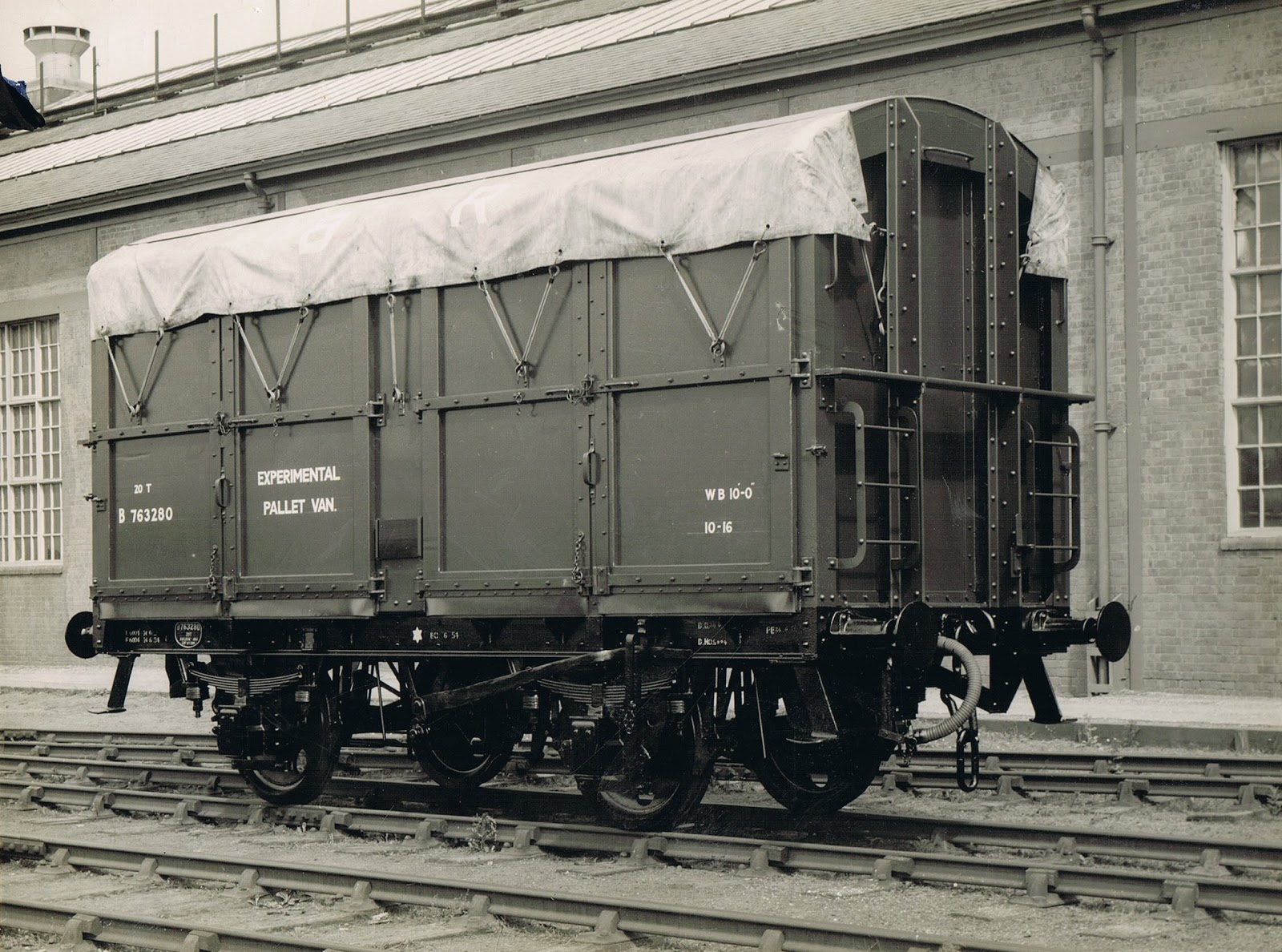
As promised some of the images of the sheer variety of freight wagons etc available on the railways in the 1950s. There was no assumption back then that railways were only suitable for certain very specialised loads - the railways could and would carry anything. The idea that railways were some sort of inflexible mode for niche freight was a POLITICAL idea, not an economic one. As Warren Buffet says once you've got your track and equipment in place almost every dollar goes to the bottom line.

From these pics it looks pretty clear that in the 50s this weird politics had not yet infected the railways, and that they were there to do a job.

What happened to all these wagons, and all these jobs? No doubt scrapped, with the traffic, still growing, forced on to ever more crowded roads!

But remember, in Europe and even in the transport backwater of the USA MOST freight, even before the energy crisis, goes by rail. In Switzerland all large lorries in transit have to switch to rail. In the poor old UK the majority of freight is still moved in inefficient, polluting and lifespan-limited lorries, clogging our roads and leading to the ludicrous situation - as at Pensford or on the A34 - of a slow-moving road clogged with lorries running alongside CLOSED railways!!

The deliberate running down of the rail network to favour the pockets of one 'man', Ernest Marples, will soon be seen as the criminal act it was. And soon, in the teeth of severe climate change and the end of cheap oil, the railways will once again be free to do the job they do so well, carrying the nation's freight.


Sunday, April 29, 2012

freight everywhere!

(Copyright The Rail Thing - 1962)

Just purchased by The Rail Thing is this slide of Templecombe shed in 1962 - ignore the copyright message!

Look at all the freight wagons around. This is just four years before the line was closed.

Idiot Beeching's biggest error was to deprive the railways of so much freight traffic because he simply didn't understand economics. The cost of maintaining and running freight wagons is minimal. A single load will probably pay for a wagon's maintenance for a year. The net effect of Beeching's attack on freight was to further reduce income, and further increase congestion on the roads. Next time you're stuck behind a lorry, churning out diesel fumes at 25 mph, remember that the freight should be on the railways, not the roads.

I fully expect Templecombe to contain even more freight wagons in 20 or 30 years' time, when the roads between towns no longer exist and rail is the only way to move things. Forget bulk loads, future rail freight will carry everything, though hopefully we won't be using quite as much stuff as we do now!

Monday, January 30, 2012

keeping things moving


So how exactly ARE we going to keep going once all the cheap oil's gone? When will you give up driving, if you haven't already? When petrol hits £2 a litre? £3? £5? £10?  Or when the roads become too damaged and dangerous to use? Or when you go to twenty garages and not one of them has any fuel available?

A lot of people have already given up driving. You still see a few learner drivers on the road but how many of them will never actually own and run a car? How many young people will never even attempt to drive?

So how WILL we get around?

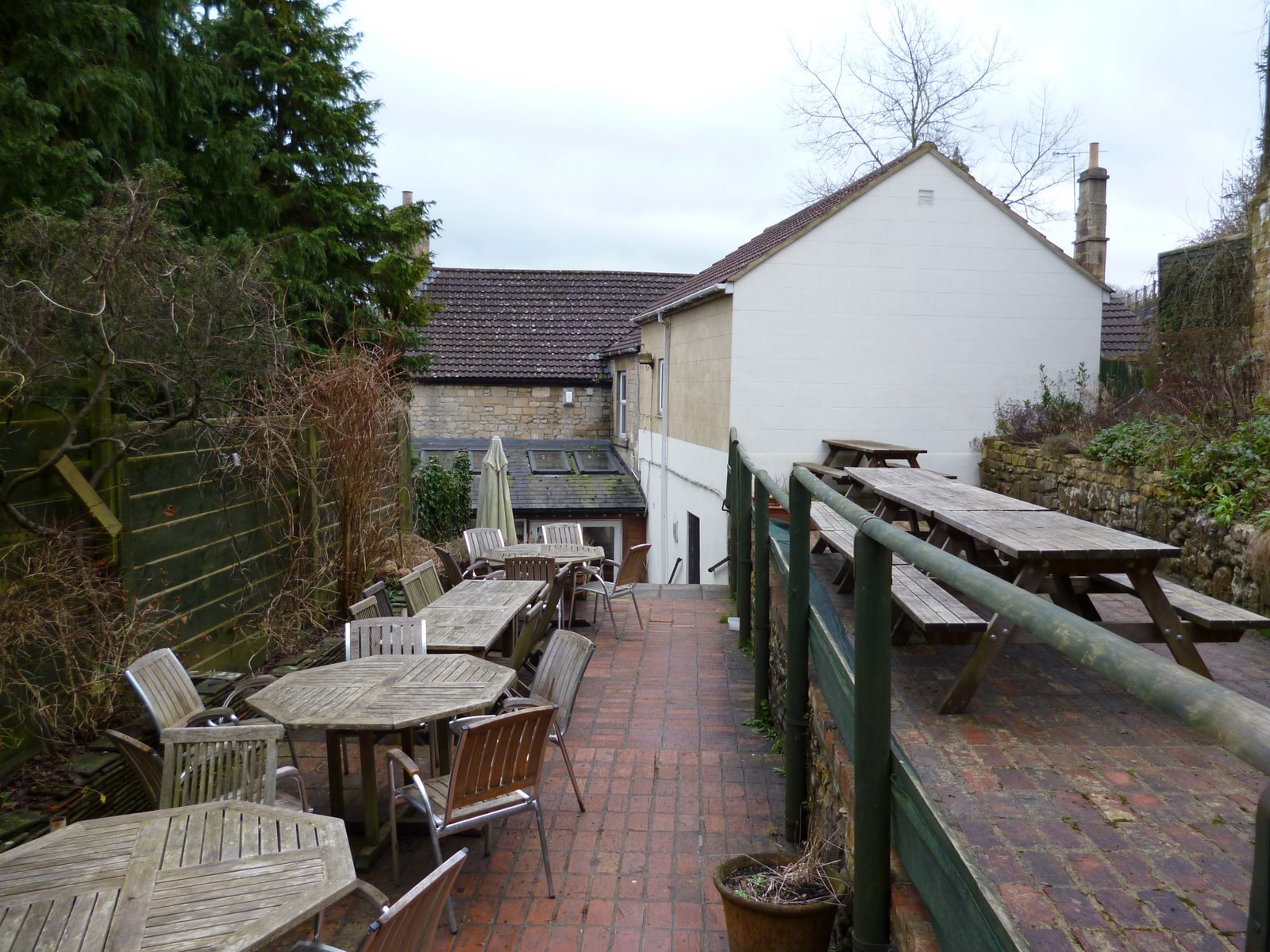
Rather than doing a big study I thought I'd narrow it right down. The pics are of the Hope and Anchor at Midford. This is the last pub surviving in the village. Some of their customers walk in or even cycle in, but most drive.

So how will this pub survive after Peak Oil hits us all? Simple - everything will come in by train or bike. They are wonderfully sited to allow both customers and freight to continue to arrive by rail. Perhaps some enterprising villagers will run a horse and cart service to reach outlying parts of the village? Or perhaps some local boffin will build an electric vehicle to do the same thing (as long as it has great suspension!). But whatever happens the starting point will be the station. The pub of course will have the easiest route of all, the platform ending just about by the pub entrance.

I can see, in twenty or thirty years time, a steady succession of passenger trains dropping off people (and picking them up) just to visit the pub. A pub that can offer the lowest prices for miles around because they get their supplies in so easily!

Frieght traffic will be very different from what we see today with the railways replacing 'white van man' for smaller deliveries, either by running dedicated pick up goods trains, or simply adding a few deliverable items to the guards compartment or a wagon or two attached to the slower passenger trains.

Everything will be more slowly paced, vastly more energy efficient and will use human power rather than machines to get things moving.
Posted by Picasa

Wednesday, November 30, 2011

another cross country line starts to stir


The Didcot, Newbury and Southampton Railway appears to be stirring from 50 years of deep sleep!
Rex Hora is looking into practical ways of restoring most of this route, primarily for freight.

The DNS was a bit of a dark sister to the S&D with its cross-country services, north-south orientation, its mix of double and single track and weight of traffic. It closed a little earlier, with Newbury to Shawford closing around 1960, the Newbury to Didcot section remaining open a few more years, and a short stretch remaining open to freight for a little longer. It was an incredibly busy route in WWII, but declined quickly afterwards.

With the need for increased rail capacity and the inevitable shift of freight from road to rail I suspect the DNS's time will soon come! Who knows, bearing in mind the above, that separate route from Winchester to Southampton may even eventually be built!

Rex has set up a basic website here - let him know you support him!
 

Wednesday, November 16, 2011

supermarkets look to the future


Thanks to Jim Type for this!

Tesco train service will remove 40,000 truck journey's [sic] annually

Thursday 10 November 2011 17:10
 
Tesco has launched a new rail freight service from Daventry to Thurrock which it says will help remove 40,000 lorries from the roads each year.

A second service, from its Daventry logistics hub to Magor, south Wales will begin later this month.

Trains leaving from Daventry will transport shampoo, deodorants, confectionary and wine and will return loaded with washing powder, washing up liquid, and detergent from Proctor & Gamble.
“Utilising rail services allows us to transport products across the country in the most sustainable way, taking thousands of lorries off the road each year and reducing our carbon emissions,” says Nigel Jones, Tesco UK logistics director. “In addition to transferring goods from our central depot to other points for distribution to the stores, the trains will also return to our depot with goods from our key suppliers making the service even more efficient.”

The supermarket says the two rail services will also save it 10,000 tonnes of CO².

Tuesday, October 18, 2011

bason bridge


(Photo courtesy Jim Type, copyright C L Caddy Collection)

Bason Bridge was the first station after Highbridge heading towards Evercreech Junction on the branch. It survived another 9 years after closure to passengers as it lay alongside a busy milk depot. I seem to remember that closure, as always with the S&D, wasn't for economic reasons but because they were building the M5 which intersected this route, so modern transport had to be sacrificed for something ephemeral and fleeting with no future. Crazy times.

Originally the branch was expected to be retained as far as Clark's factory in Glastonbury after closure for passengers. I suspect the people of Glastonbury already regret that that didn't happen, as this longer route may well have survived into the rail era and would still be there, probably already reopened for passengers. Oh well, it will be back soon enough!

Friday, September 02, 2011

responsibility - and opportunity


The phone calls started a while ago. Normally from solicitors, but today from a  prospective buyer ...

They are always along the lines of 'I am thinking of buying a house in (S&D former station name). What are your plans and how long before trains are running?'

If nothing else it shows that people are beginning to take us seriously, and that the idea that the line will return is now becoming firmly fixed in the minds of at least some people.

And it's a difficult thing to answer. We have no plans or timescales for reinstatement, only a vague idea, because everything is basically in the hands of future events.

I do always stress that, even today when there are still alternatives, houses near stations always sell for more than those at a distance. So a railway station nearby is already a huge selling point.

Today's caller was more worried about heavy freights thundering past at the bottom of his garden. Of course eventually that will happen, but it may be decades yet.

I tried to explain that as the roads vanish he'll need the trains as much as anyone, he seemed to think he was somehow unique and would not need them!

I added that the track may not be back for ten or even twenty years, which seemed to please him, but will it really take that long? I'm beginning to wonder.

People are making life changing decsions around the future existence of the S&D. Surely that will convince even the doubters and dinosaurs that we are, to quite Take That, back for good ...
Posted by Picasa

Wednesday, August 24, 2011

britain's booming seaside ...


Three shots from Bournemouth at the weekend. Whilst the Air Show was on, this still shows the pure pulling power of the place! A hot August in Bournemouth would normally pull out visitors in their thousands.

British seaside resorts are booming. A lot of people who used to fly abroad are choosing to stay in the UK - no waiting at airports, language problems etc. And to think how much easier it will be in the future when all these visitors will all be coming in by train. No more vile car parks, busy roads etc, just a pleasant built environment, pollution free and safe.

A million fewer drivers on the road, a million extra cyclists in the last year. The pattern's clear, our car culture is now dying, right at the start of the beginning of the end of cheap oil. I doubt it has much power to survive the real oil price shocks that are coming. All investment will now be going to railways, tramways and cycleways. The S&D should be right at the top of the queue for that investment. It's a total no-brainer. Whilst Bournemouth does still have a rail link it is orientated towards Southampton and London. But visitors like us come from Bristol - difficult to do reasonably by rail, cost and time-wise. And of course from much further - the Midlands and Northern England. They need a direct link with through trains, from places like Manchester, Liverpool, Birmingham etc. Capacity restraints will very soon kick in on Bournemouth's only remaining line that can carry this traffic. And bear in mind that freight traffic will explode over the next couple of decades.

And of course people living in the huge Bournemouth-Poole conurbation will need to go in the other direction. The S&D will also allow them to access Exeter, Devon and Cornwall by changing at Templecombe - bringing extra traffic to the Salisbury-Exeter route, once notoriously singled but which I can see needing long stretches of quadruple track in the not-too-distant future. Who knows, the LSWR's one time plan to build a line westwards from Dorchester to Exeter tapping into the many seaside resorts between will finally be built! All this upgrading and new build should help to ease capacity restraints in this part of the world, assuming demand doesn't go too high ...
Posted by Picasa

Monday, May 09, 2011

rail keeps booming


(Both Bedminster 12.4.2011 copyright Steve Sainsbury)

Rail journeys are up by 15 million in the first quarter of the year compared to the same quarter in 2010. The main reason stated is the price of fuel. This is the busiest the railways have been since the 1920s.

So when will this backwards-looking government start to realise that rail capacity needs to be greatly increased NOW, not simply by putting more trains on existing routes or by building High Speed routes to free up capacity, but by building NEW community railways?  The railways can only get busier as the long term trend for rising oil costs continue, freight will soon be far cheaper to carry by train and supply crunches and rationing (directly or by price) for public petrol and diesel can only be a few years away now.

This is indeed the golden age for rail and it's only going to get better and better!


Wednesday, January 05, 2011

where the US leads we follow


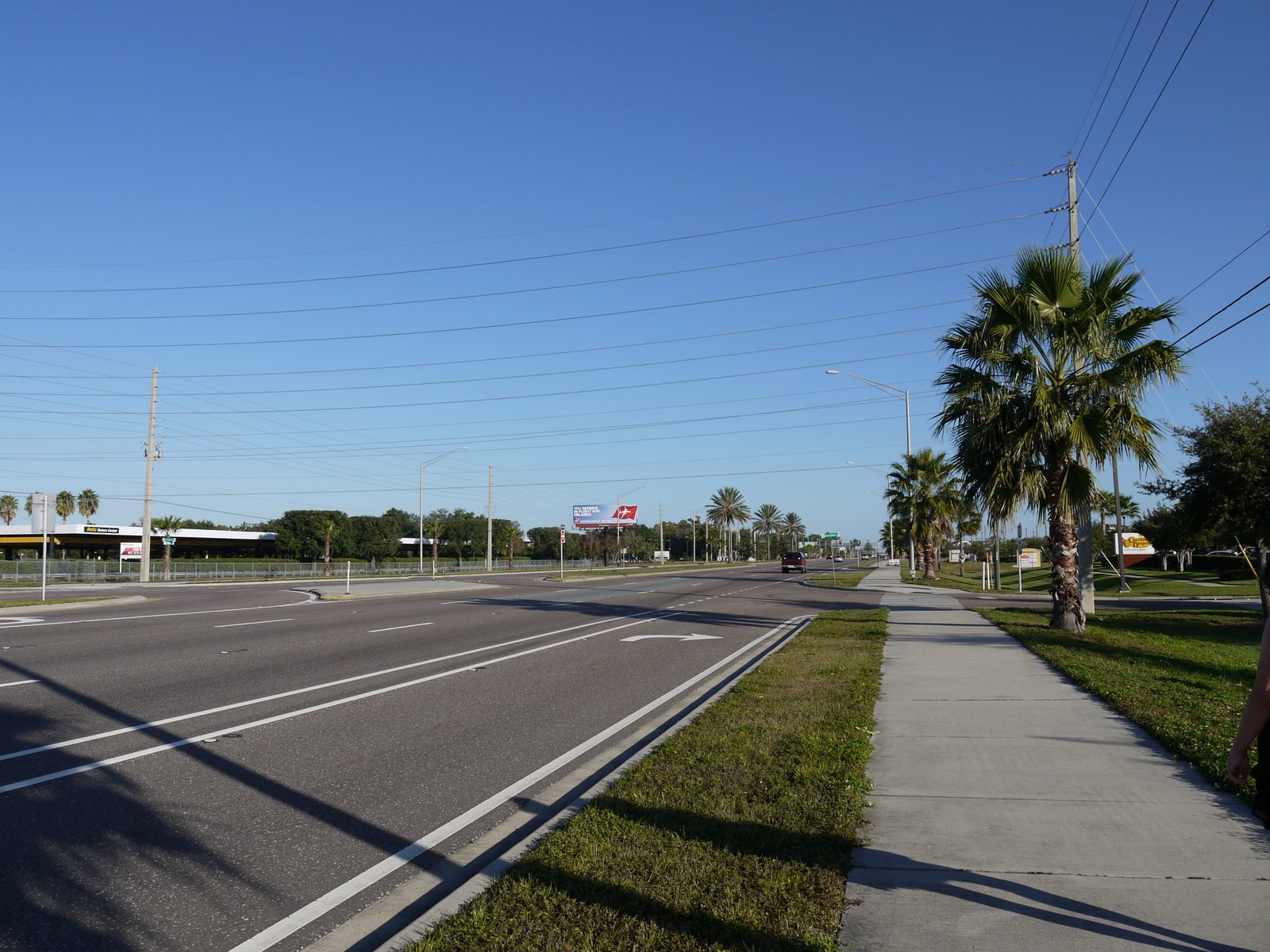
(Orlando November 2010)

I made my first trip to the USA in November and I was VERY impressed. It was much cleaner, friendlier and, surprisingly, greener than the UK. Dozens of new tram systems have opened up there in the last ten years and rail is seeing a big revival. Most US freight is already carried by rail. The US did of course have a superb rail network - both steam and electric (interurban) until about the 40s, but then cheap oil and the car took over.

Cheap oil is now vanishing and the US is leading the way in the switch from road to rail. See below for a tangential view of this development.

This from today's Whiskey and Gunpowder (an investment site)


Auto-suburbia is losing its utility and its desirability. More from "The
Echo Boom: A New Wave of Market Change":

One overlooked issue in particular about the Echo Boomers will have a meaningful impact on all forms of real estate…they don’t drive.

According to a report by Kiplinger, motorists aged 21 to 30 now account for 14% of miles driven, down from 21% in 1995. As quoted in that report, William Draves, president of Learning Resources Network pointed out, "This generation focuses its buying on computers, BlackBerrys, music and software and views commuting a few hours by car a huge productivity waste when they can work using PDAs while taking the bus and train."

This certainly doesn’t bode well for the automotive industry, but it also may not help real estate strategies that rely on communities and suburbs that can only be navigated by car. The Baby Boomers fueled the growth of cities that revolve around cars, but the Echo Boomers are likely to flock to places where they don’t have to drive every day. This could be a significant drag on low-density communities without mass transit and a boon to older, more compact cities.

Posted by Picasa

Sunday, October 10, 2010

hardly a surprise ...


... it is the 21st century after all!

Wednesday, October 6th 2010 14:00

27 local jobs have been lost with the closure of George Taylor Limited.

The firm based in Bedminster will no longer carry out any haulage work after over a century of doing so throughout the city.

Bosses have blamed the effects of the current economic climate for the business' decline.

The company employs 17 drivers and 10 other staff. Managing Director Roger Scarrett said: "It is with great regret that after over 100 years in the haulage business the company will realign itself and completely withdraw from all its haulage related activities. The company will continue to manage its property and other resources.

"We have taken the decision because demand for our quality service has declined in the global recession and we did not want to compromise on that quality, which the George Taylor name has been associated with for so many years."

"Sadly the loyal and dedicated workforce who over a long period of time have continuously produced service levels of the highest standard through their commitment and professionalism are the innocent victims in this. They are all friends as well as work colleagues."

"In the current economy customers are putting low prices above value and we are not prepared to compromise our service levels."The company was originally started by George Taylor and his horse and cart over 100 years ago.

All of the firm's equipment and vehicles, including some historic pieces will be sold at an auction this weekend.


This is happening all the time. Perhaps they should go back to the horses and carts - at least they have a future!

Businesses should be staying ahead of structural changes in the economy. Transport in the 21st century exclusively means railed transport. The roads are dying, costs are going through the roof and the whole business model is flawed. Transport companies should, like Eddie Stobart is doing, have been realigning themselves for years to switch their business to rail in one way or another. Either by developing rail freight or even by building the vehicles that will be needed in the future - heavy goods locos, freight wagons and industrial and light railway equipment. It's no good crying for a world that is changing before your eyes, you need to make the adjustments before your rivals do. This is the beauty of capitalism, and the underlying principle behind the New S&D.

Me? I left road haulage over twenty years ago as the way things were going was clear to me even then.
Posted by Picasa

Wednesday, May 05, 2010

pensioners get it right!


(Sent by Mick Knox)

Protest pensioner halts A35 traffic in Dorset

Tony Fuller: "We are afraid that the lorries are going to crash into our home".

A Dorset pensioner angry at lorries driving through his village blocked traffic for an hour by making sure a pelican crossing was in constant use.

Tony Fuller, 77, and his neighbours carried out the protest in Chideock, near Bridport, on Tuesday.

Traffic on the A35, the main coastal road between Bournemouth and Exeter, backed up within minutes.

Mr Fuller said the roads were too narrow for lorries and he wanted a bypass built around the village.

He said his house had been crashed into by vehicles twice and on one occasion the driver died.

'Terrible pollution'

He added: "It's virtually like a motorway, in fact it's got as much traffic on it as a motorway but there's no pavements and the houses are right on the road.

"The pollution in the village is terrible. You can't walk through the village without choking."

The A35 is the main coastal route between Bournemouth and Exeter

Is dawdling on a crossing illegal?

He said he was upset that plans for a bypass were abandoned several years ago.

He added: "If our local county council is spending £77m on a bypass to Weymouth for the Olympics for two weeks... why don't they come and do something for the citizens and parishioners of Chideock?

"We only want them to show they are doing something and when they do we will stop, but if they don't we shall continue, now, year after year."

Mr Fuller said about 50 residents had already pledged their support to the protest.

He added: "If they all turn up and they each press that button once, one after the other, that's 50 times that traffic will be stopped and it will cause chaos.

"Because they've only gone across once each, they can't be prosecuted for using the crossing that was put there for their benefit."

The Highways Agency, which is responsible for the A35, declined to comment.

Dorset County Council said the Weymouth relief road had mostly been funded by the Department for Transport and the council's contribution had totalled £8.6m rather than £77m.


Forget about a bypass Gramps - just press for ALL freight to be switched to the railways now!

Posted by Picasa

Wednesday, April 28, 2010

paradigm shift


Following on from yesterday's post re 1970s style council dinosaurs, it's clear that not only is a paradigm shift in transport planning required but that it's also fairly imminent. The mixed messages sent by those responsible for transport matters at all levels is a clear indication that things are changing. But of course we are in the VERY early stages of the energy crisis, which has been somewhat masked by the global recession, which is on the verge of becoming a double-dip recession or even a depression. This has helped to preserve fuel stocks and inventories as well as diverting people's attention elsewhere.

To my mind the paradigm shift will take two major shapes. The first will be the understanding that never again will it be so easy - or cheap - to use masses of energy. This will lead to a whole new attitude to energy use which will be based on efficiency and conservation, as well as the search for sustainable and renewal energy. This is being done in a tiny way already, though under the mask of 'tackling climate change', which carefully avoids the much scarier Peak Oil issue.

The second change will be in our attitude to road transport. We are already using cars less, but the biggest change will be the wholesale switch of freight from road to rail. This won't really happen until we're firmly ensconsed in the first stage of Peak Oil awareness, as stated above. There will then be a scramble to switch freight traffic to rail, which will soon run up against the constraints of limited capacity, lack of freight vehicles and locomotives, and the urgent need for a wholesale rebuilding of the network plus the introduction of dedicated freight lines and private sidings. This will be the moment the rail revival really takes shape!

Once this happens people will, after a few golden years of quieter roads thanks to no lorries and fewer cars, question the wisdom of throwing large amounts of tax money at maintaining the road network. Any shortage of funds will lead to massive infrastructure damage as potholes appear. Any interruption in fuel supplies - inevitable in an energy constrained world - will lead to more and more people switching to the certainty of rail.

We see paradigm shifts all the time. The unthinkable suddenly becomes the everday. Who would have thought a year ago that Plan B would switch from the potty-mouthed urban rap of Who Needs Actions When You've Got Words to the sweet soul of The Defamation of Strickland Banks?
Posted by Picasa

Sunday, March 28, 2010

a view from the board ...


(Round about Sturminster 2009)

Simon Ellison joined the board back in January and is particularly interested in the Sturminster Newton area.

He's just posted a comment which I think should be promoted to the main blog page as it covers much of the reasons why we exist and cleverly draws together many points raised (and challenged!) here over the last few weeks.

I note, with some disquiet, the rather 'negative' comments which seem to blight all aspects of railway restoration, in whatever form that takes.

Thing is: There are ALWAYS dissenters and ne'er do well's who delight in the negativity of their own lives, and like to project on to others their attitude.

If you do not believe in something with passion, then it's best not be get involved at all - applies to life generally, not just railways.

The obstacles to reinstating a continuous rail route from Bath/Bristol through to Poole/Bournemouth are huge, but not insurmountable. Of course there will have to be deviation from the original route at various locations, but, essentially, the route in its entirety should be, and MUST be reinstated, because rail will be the only sure way of transporting heavy freight and passengers in a viable way to smaller towns and villages in the future of road degradation and spiralling fuel costs.

Councils are being squeezed like sponges for funding which will not be forthcoming for essential road repair - here, where I live, roads are like rutted farm tracks, damage to wheels, tyres and steering geometry is becoming horrendous as well as unsafe.

Roads like minor 'B' and unclassified ones are left to their own devices due to lack of funding for repairs - that situation is fuelled by inclement weather which rapidly adds to the [rapid] destruction of surface 'black top'

How will we move anywhere in relative safety without wrecking our spines and our vehicle's suspension ? Are we to remain isolated in villages which have roads not fit for purpose?

At least a rail link would mean no more road wrecking heavy trucks - all commerce conducted by small trucks/vans from RAIL depot to destination - probably by electric engined vehicles.

But, before we all fall into the trap of 'electric' propelled vehicles [of ANY sort], just remember this: electricity has to be generated - which still means oil/coal/nuclear powered generating plants - so at whatever point, there will always be some form of 'unfriendly' fuel being used to provide all this 'clean' electricity. I'm sorry, but these pathetic wind farms will just NOT fit the bill for reliable and continous power supply, besides which, they are a blot on the landscape as well being a major threat to wild life, which also has the right to exist.

Remember this: Rail over road transport has much in it's favour:

A. It is fairly unobtrusive to the environment - noise is a minor consideration, once a train has passed the sound of its passage fades back into natural surrounding sound level, unlike the continuous drone of road transport.

B. The physical space needed to run trains is much less than an A class road!

C. Many more people die on the roads than on railways.

D. The cost of fuel is slashed as ton for ton, railway transport is far more efficient [much less frictional resistance on steel rail].

E. More economical - a typical train load is equivalent to many 44 ton trucks but in ONE movement and with ONE loco.

F. Faster - over distance, rail is MUCH quicker than road.

There are many other considerations which I have not entered here, but I am preaching to the converted ! It's the general public and local government who need to be 'educated'

The monopoly of road transport is over - it's time to bring back OUR trains for the betterment of OUR lives, our children's and their children's lives.

Short term-ism has been this country's failing - it's the reason for blinded politicians wrecking a once comprehensive railway infrastructure, and HERE lies our problem. It's so much easier to destroy than construct - all for short term profit/gains which gain NOTHING in the 'long run'.

We should DEMAND government aid in repairing the damage THEY were responsible for in the first place!

Monday, March 22, 2010

more congestion


A comment from Mick Knox in response to Ian W's post yesterday -

Congestion is certainly the reason a lot of people use rail now, and to take the Portishead Branch as an example how long would it take using a train, compared with a car, to commute into Bristol? The public understand this argument well, and it also stands up with the switch to electric cars. What is the journey time from Radstock to Bristol, or Bath? And would that be easily beaten by train today? I would have thought easily so?

Most motorists would love to see more freight on the railways as it would leave more road space for them, together with less roadworks due to the damage caused by the heavy goods vehicles.

There is nothing more frustrating than sitting in traffic jams, so yes congestion is an issue the general public will understand. Post ‘Peak Oil’ it may not be, but today it is, so I suggest we use this to our advantage.

It was a valid reason not to close the Somerset & Dorset and therefore it is a reason to re-open it again.


My own view was that we could wrong foot ourselves by talking about congestion as a problem into the future. But I think there's a way to tie this all together. And perhaps I was being too dogmatic ...

Firstly we need to understand why there is congestion. If road really was a mode for the future then surely road development would continue as a reaction to congestion? Congestion would perhaps happen somewhere and measures would then be undertaken to get rid of it. But this doesn't happen. We need to understand why.

It seems to me that governments are well aware of the impact of Peak Oil, even if they are trying to keep it from us. They hide the measures needed to deal with it under the 'climate change' banner but any intelligent person sees through that quickly enough. (Clearly the world is warming and our activities are responsible for much of it, but this will slow down as Peak Oil hits so it's not a long term problem unless we reach certain tipping points). Governments will also be aware of the impending end of cheap air travel but they use different methods to hide this in their devious equations, like proposing a new runway for Heathrow knowing full well it wil never be built but being able to pass the blame on to climate change activists for example.

But underneath all deviousness and posturing there is a very real fear by government that this is a problem so big that they may not be able to contain it, hence the fact it's hidden at the moment from the general public. It may even be that climate change was put forward as a safe alternative just to test some of the measures that will be needed.

Okay, there was a lot of waffle there, but it does underline why road development has ground to a halt. It not only shows that governments are well aware that petrol and diesel-fuelled vehicles have had their day, but that the proposed alternatives will NOT fill the gap. Hence the current level of roads will be more than adequate to cope with future traffic needs. This means that congestion is a problem now, whilst oil-derived fuels are so incredibly cheap, but will not be in the future.

There's another side issue which concerns fuel prices. People are surprised that the retail price has remained stubbornly high despite the falling price of crude oil (at least from its 2007 highs of $147 barrel). This is easily explained by the lack of refining infrastructure. New refineries are not being built because the oil companies are even more aware than we are of the looming oil shortages. There's no point in building new refining facilities as whilst they may be needed for a few years they will be derelict in a few decades as the raw material will have dried up. Hence the current level of refining capacity will be more than adequate to cope with future needs.

So how do we apply all this to the New S&D without ending up with egg on our faces? I think we need to set current congestion levels within a long term framework. We've all been held up in traffic jams and they are without doubt both very annoying and a terrible waste of precious time. They also have a damaging effect on economic activity. Mick has mentoned the problem of heavy lorries and this is something we can really exploit. Car drivers hate them and railways are desperate to grab the freight they currently carry. So we need to encourage aggressive pricing wars between railfreight companies and the road based freight companies. Rail will become more and more advantaged as the system expands and the price of fuel goes up. Whilst railways will also be affected by the rising cost of energy the 400% extra efficiency of rail will work for rail and against road in this context. Freight will start switching from road to rail, and the New S&D will be as much a freight carrier as a passenger carrier. So this part of our programme should appeal to car drivers, even if they don't (for now) plan to use our trains. But it won't hurt to throw Peak Oil into the equation and say to drivers that by pushing freight onto new railways the infrastructure will then be in place for a return of passenger services on most lines as the oil runs out. They don't need to believe in Peak Oil to suffer from its effects! As the price of driving a private car goes stratospheric then people will return to the railways in their droves. It may be the last thing that goes, but go it will!

Thursday, February 25, 2010

jurassic park


The past.


The future.

This extraordinary load of old tosh appeared today on AOL.

Road congestion 'could rise by 37%'

Britain's roads need more investment, the Road Users' Alliance has said.

Traffic congestion will rise by 37% if the current "minimal levels of investment" in roads continues for the next 15 years, a report has said.

By 2025, drivers could be wasting 656 million hours a year - the equivalent of 75,000 years - sitting in traffic jams, the Road Users' Alliance (RUA) added.

"Under-investment in the strategic road network has left the UK with a transport system which is uncompetitive, congested, vulnerable to incident and inadequate to meet the future needs of the economy," the report concluded.

The RUA said that the UK's investment in new motorway capacity was among the lowest in Europe, with no new motorway miles being created in 2007 and 2008.

It added that while £47 billion a year was collected in road user taxes, only £4 billion was invested in new road capacity.
The survey also revealed that the major road network grew by 1% between 1998 and 2008, but had to cope with traffic growth of almost 10%.

Travel by car remained the most popular form of transport, with 92% of Britain's passenger transport taking place by road and 70% of commuting and business journeys made by car.

RUA director Tim Green said: "Road users have for too long been regarded as wallets on wheels, providing an endless stream of revenue for the Government to spend on anything except the road network.

"Hard choices face whichever party leader finds himself in Downing Street after the election. Will limited funds be spent on rail, which moves fewer than 10% of UK passengers, or invested in the transport mode which makes the biggest contribution to the UK's prosperity and quality of life - the road network?"


Well, I know dinosaurs had tiny brains but this goes beyond that! Why do people so desperately want to hang on to the twentieth century? Was it really that good?

All through this piece the clues are there. If any government seriously believed roads DID have a future then obviously this investment would be made - it would be madness NOT to invest in the road network. But we know that roads don't have a future - no amount of scrabbling about trying to replace oil is ever going to produce the levels of traffic we have today. There's no possibility of road transport being used for freight in the future -except for very short runs where private sidings, goods lines or goods tramways haven't yet been built. All long distance travel will quickly switch from road (and air) to rail. Private cars will become really scarce and the roads themselves will begin to physically vanish from the landscape, apart from those adopted by Sustrans, horse riders and walkers. This is the reality and these mugs at the anachronistic Road Users' Alliance have found themselves on the wrong side of history.

I almost feel sorry for them!
Posted by Picasa

Friday, October 30, 2009

majorca's future


I'm away for a couple of days from this evening to enjoy the Halloween delights of Pontins, Brean Sands.

Still on the holiday theme just a few reflections on our previous trip to Majorca.

Majorca is investing heavily in its transport future with a rebuilt railway network, new metro and planned tramways. Everything is switching from road to rail, as it should.

Majorca is, of course, primarily a tourist destination and much of its economy depends on visitors, an excellent reason for providing cheap, modern and efficient public transport. But it's also an island, and this may cause real problems in the future. Almost all visitors currently arrive by air, but air travel is doomed, no matter how much we don't want it to be.

Whilst resorts on the mainland will be served by high speed rail in the future there's no such future for Majorca - the island simply lies too far off shore to be connected by tunnel. So visitors in the future will need to arrive by boat. Will people bother? If anything Majorca will have to make itself even more attractive so investment in public transport is likely to increase.

We had a comment the other day from a group in Majorca that are opposed to the extension of the Manacor line to Arta. They are quite seriously suggesting buses can do the job! To be fair to them they are not anti public transport, and think the money that will be spent on the Arta line will be better spent elsewhere. But they obviously haven't had their Peak Oil Moment yet. How exactly will buses carry freight? How will buses tempt travellers from their cars? They haven't anywhere else in the world, so what will be different in Majorca? Trams tempt people from cars, as do trains. Trains and trams can carry freight. They are also not subject to congestion.

The line to Arta will be built, as will the proposed branch to Porto Christo. The anti rail group are 100% wrong.

But then there are still people who think the Earth is flat!
Posted by Picasa